
FEL Grants: Supported projects
FEL regularly provides small grants to fund projects that revitalize and support the use of endangered languages. On this page you can see reports from a selection of the projects that we have supported. By joining FEL, you can support activities such as these.
Select a grantee, language, region, or year:
Grantee:
Language:
Region:
Year:
Grant projects conducted in region: all regions
Title: Printing, Public Presentation and Distribution of Multilingual Word List of Okpe, Urhobo and Uvwie
Country: Nigeria
Language(s): Okpe,Urhobo,Uvwie
Grantee: Akpobome Diffre-Odiete
Year: 2014
Project summary
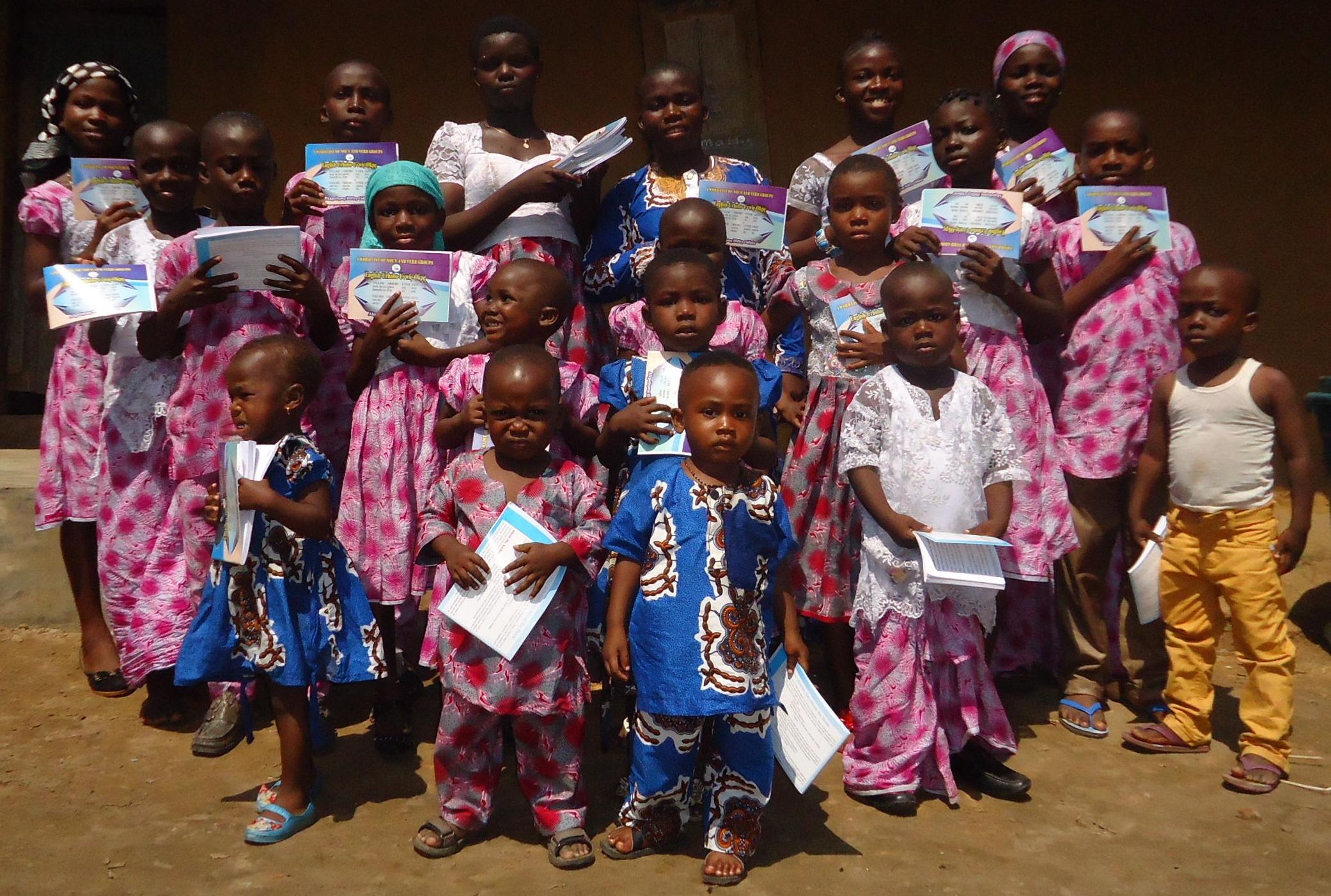
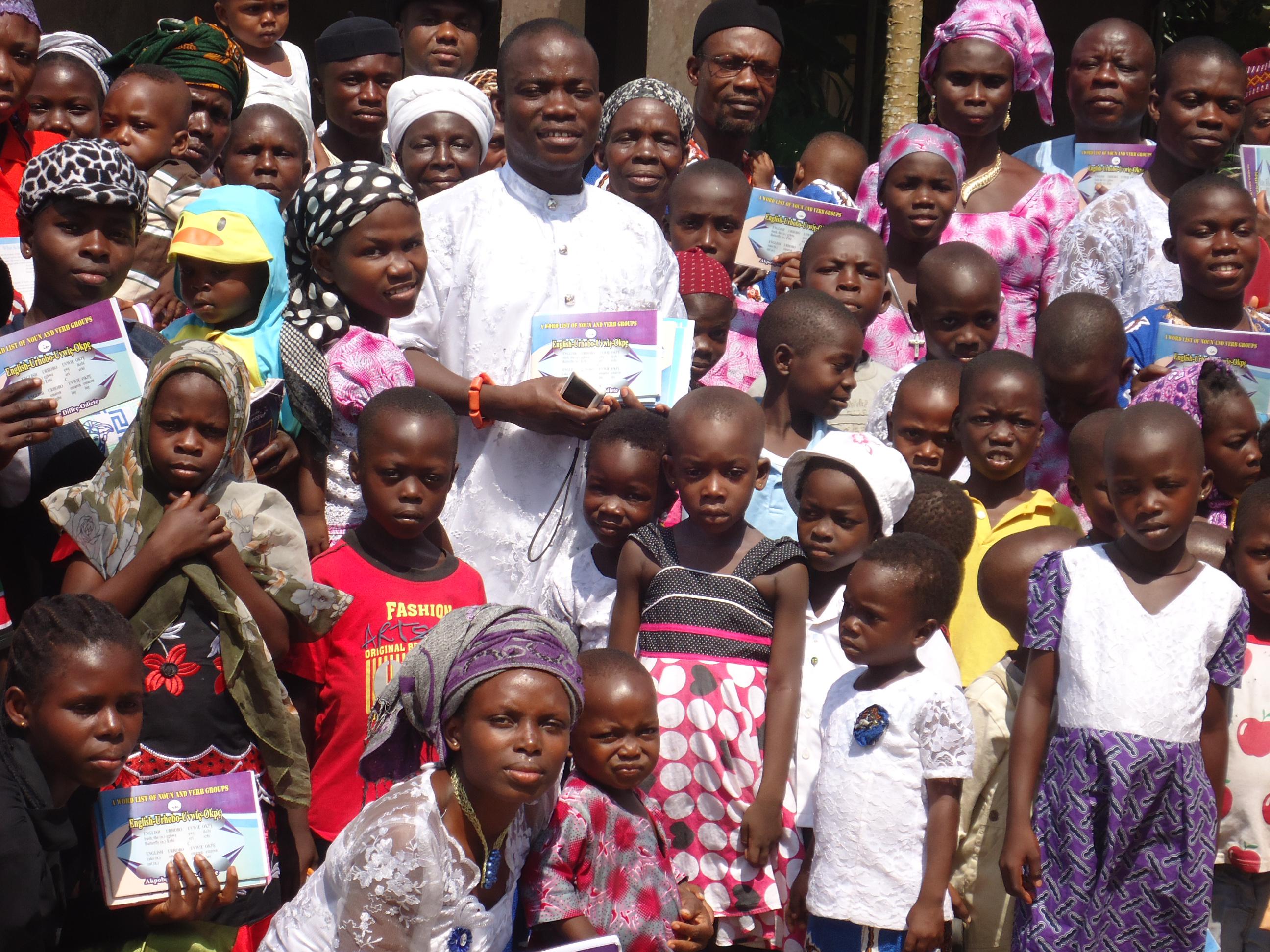
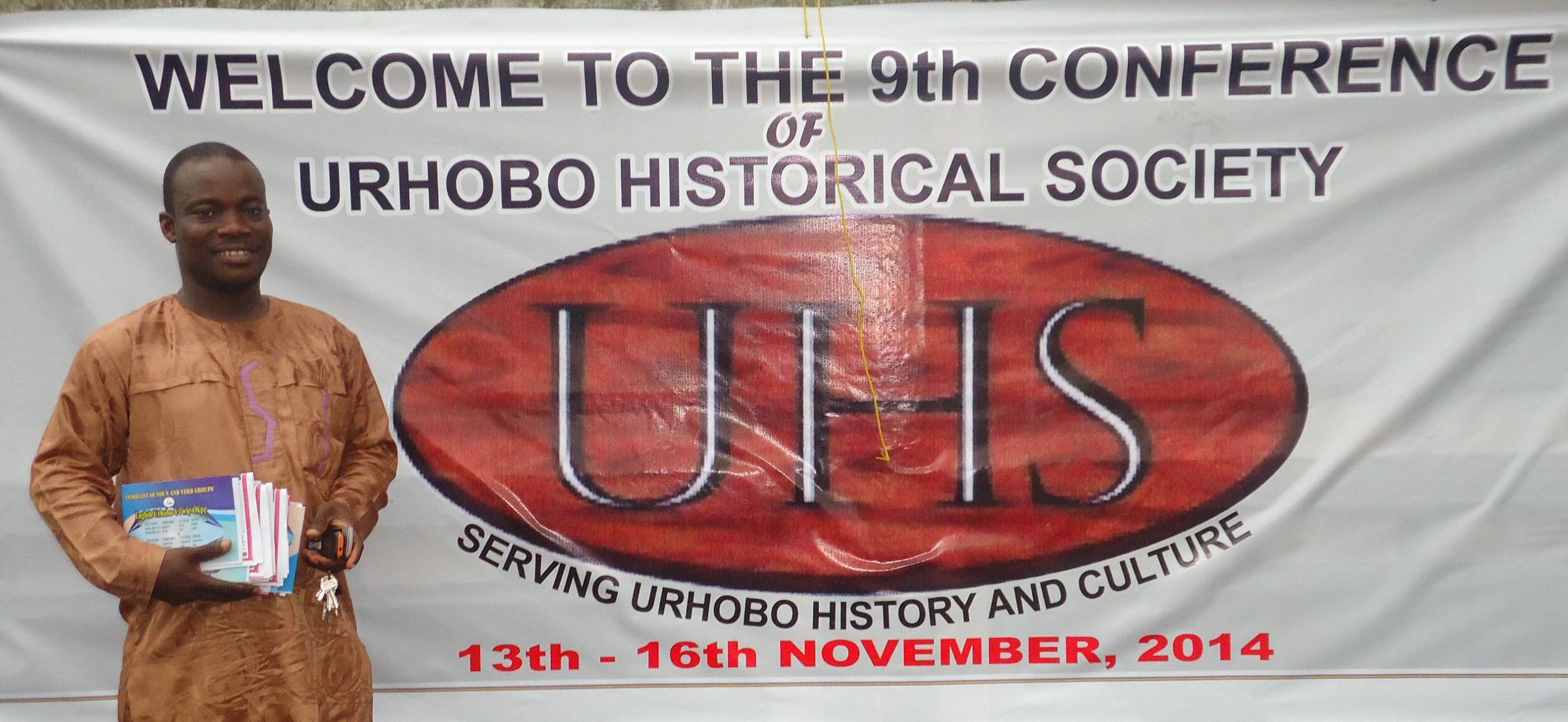
This work is the second phase of a field project in which the data were already collected and analyzed. The project aims to promote language diversity, equality and preservation among the single ethnic but linguistically distinct Opke, Urhobo and Uvwie people of southern Nigeria. In this second phase, A Wordlist of Nouns and Verb Groups in English, Urhobo, Uvwie, Okpe - A Comparative multi-lingua wordlist of English-Urhobo-Uvwie-Okpe was printed. The word list is actually the end product of the project “Three Languages, One People: Linguistic and Cultural Documentation of Okpe, Urhobo and Uvwie”, which the Foundation for Endangered Languages funded in 2013. The printed work will serve as a balanced reference material to linguists, students and general users of the three languages.
More information on the background of the project is available at https://themowoecentre.wordpress.com/language-documentation-issues/
Title: Kinyindu Endangered Languages’s Proverbs Translation for the Nyindu Indigenous Young Generation
Country: Congo
Language(s): Kinyindu
Grantee: Bamwiji Musombwa
Year: 2014
Project summary
The overall objective of this project was to promote our Nyindu indigenous people’s ancestors’ wisdom contained in proverbs, by providing translations in Kiswahili and in French of the recently documented proverbs. Kinyindu is the endangered language of the Batwa originated Nyindu indigenous people living in the Lwindi rural district; in the Mwenga territory in South Kivu, an eastern Province of the D.R. Congo / Central Africa.
Thanks to the grant received from the FEL, our team has worked on promoting our Nyindu indigenous people ancestors’ wisdom and the traditional knowledge contained in our proverbs by translating these proverbs first in Kiswahili and then in French. In order to do so, I first gathered with remnant literate Nyindu indigenous and Kinyindu speakers, to discus the procedure to be followed in working on the translations. Given that some of these remnant Nyindu speakers do not speak or understand French, we worked first on the Kiswahili translation. I then have worked on the French translation from both the solely Kinyindu version of the proverbs (which had been produced before the current project started), and by referring to the bilingual Kinyindu-Kiswahili version mentioned before.
At the end of October 2014, the electronic versions were available, and after some revision and editing, the printed versions of the bilingual Banyindu indigenous Proverbs book in Kinyindu - Kiswahili, and the bilingual Banyindu indigenous Proverbs book in Kinyindu - French were published. Finally, the issued books were introduced to our community members and copies were also distributed to 8 schools functioning in our Lwindi territory.


Title: Documentation of Tulihua Dialect of Lalo
Country: China
Language(s): Tulihua
Grantee: Tingsheng Zhou
Year: 2014
Project summary
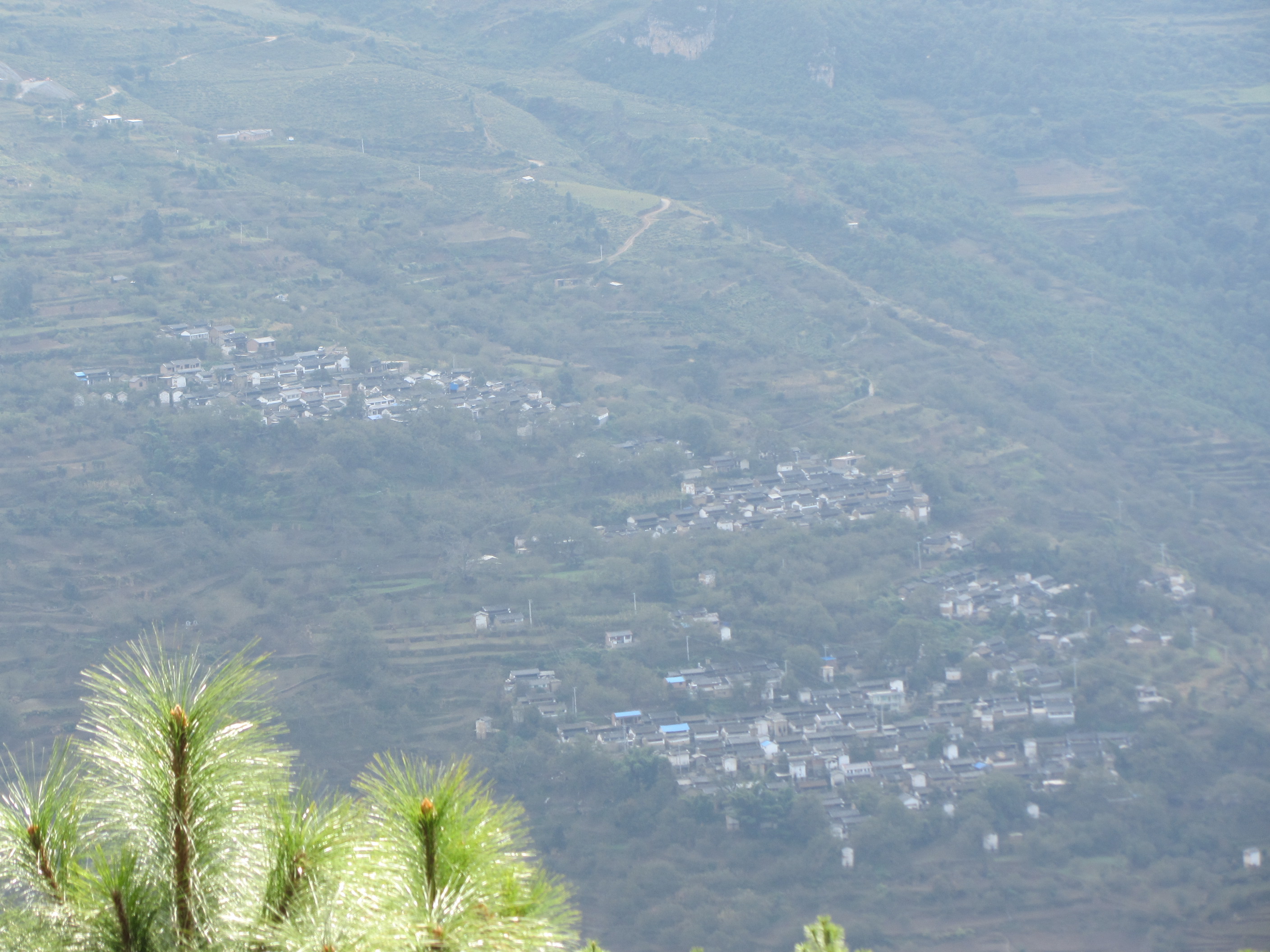
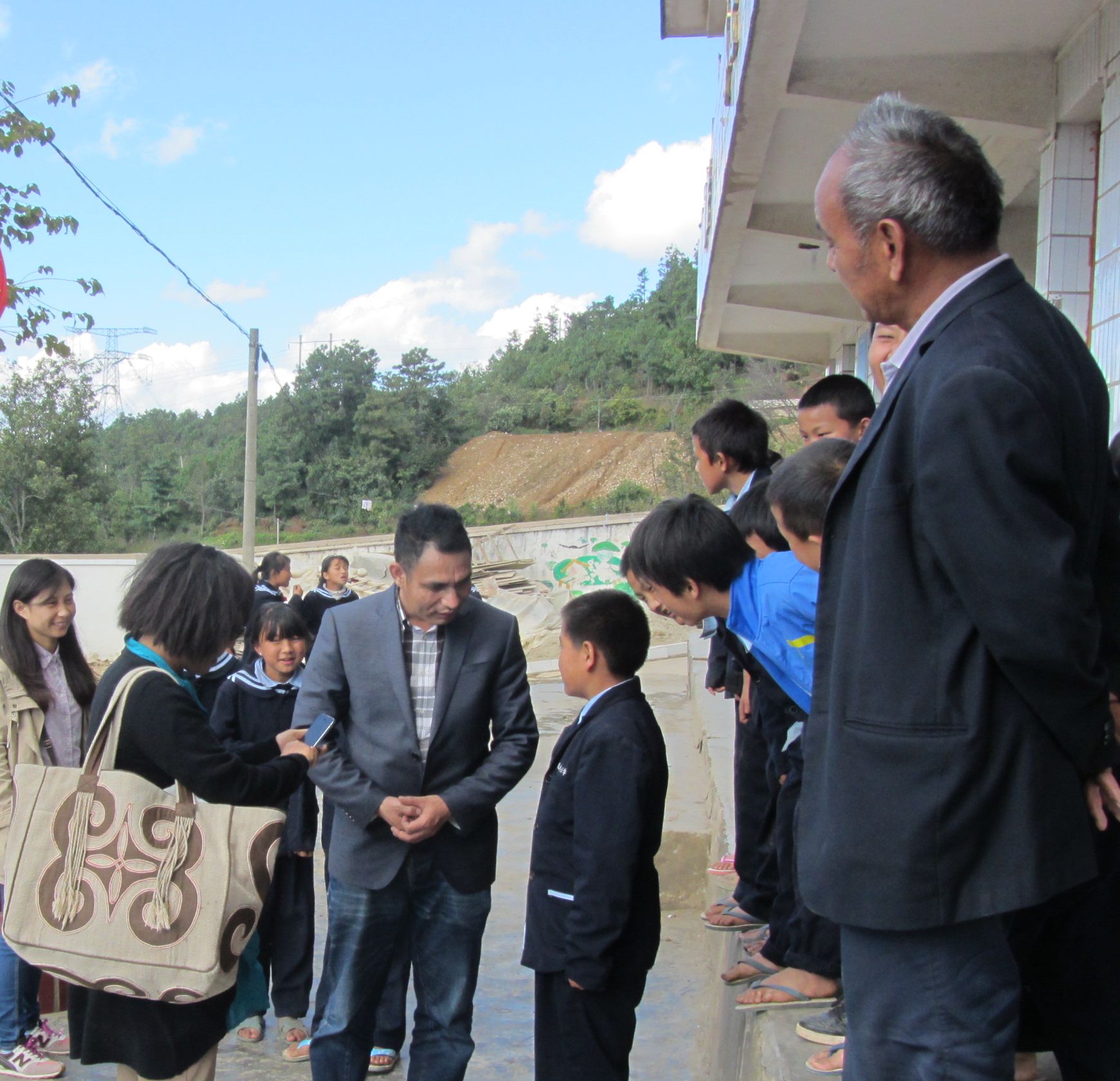
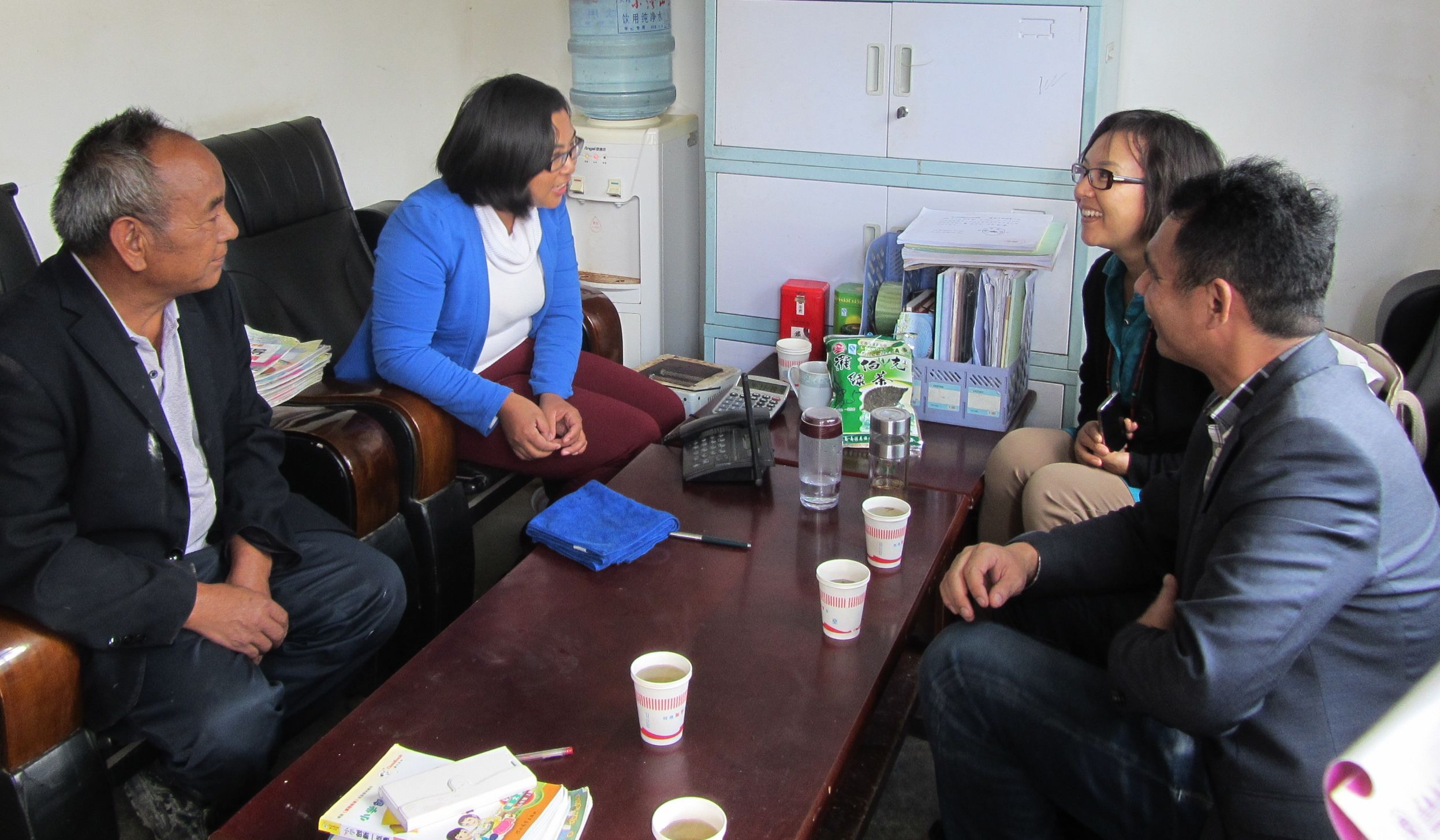
This project aims at documentation of Tulihua dialect of Lalo, a Central Loloish language of the Lolo-Burmese branch of Tibeto-Burman. This Lalo dialect is spoken by about 5,000 Lalo Yi people in Xiaowan East Town, Nanjian County of Dali Prefecture in Southwest China’s Province of Yunnan. Tulihua is seriously fragile and endangered, because transmission of Tulihua from parental generation to children has been broken. The local Han variety is the dominant language in administration, public media, education, market, meeting, and government agency. The folk literature, traditional arts and religion may also die out along with the losing language.
Up to now, no documentation of Tulihua is available. Therefore, the applicant, a native Tulihua speaker from the town and now a Ph.D. candidate at Minzu University of China, is enthusiastic about preservation and revitalization of Tulihua. He carried out this project to record and transcribe the basic words of Tulihua, daily conversations and narrations of some production activities or socializing occasions, as well as some traditional singing verses, folk stories and shamans’ chants in Tulihua. This project is a fieldwork of language documentation designed in a scientific way and carried out in full support of the language communities.
Title: Orthography Workshop for the Dameli, Yidgha, and Gawarbati Ethnolinguist
Country: Pakistan
Language(s): Dameli,Yidgha,Gawarbati
Grantee: Fakhruddin Akhunzada
Year: 2014
Project summary
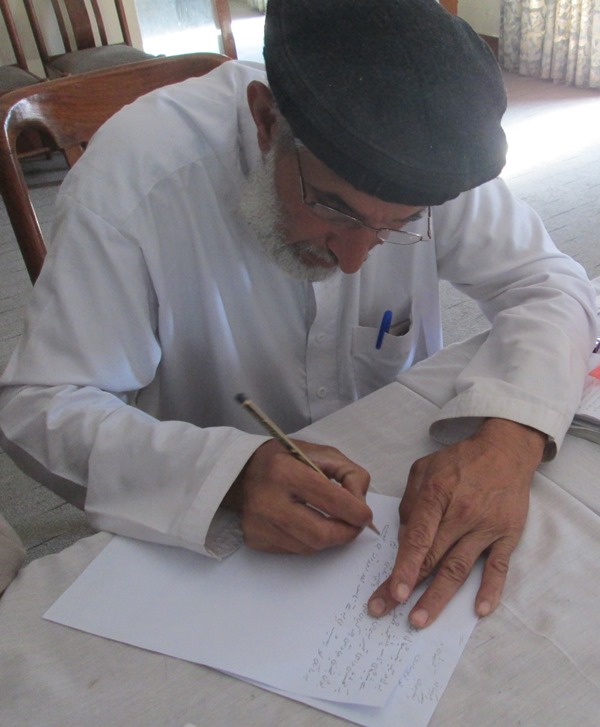
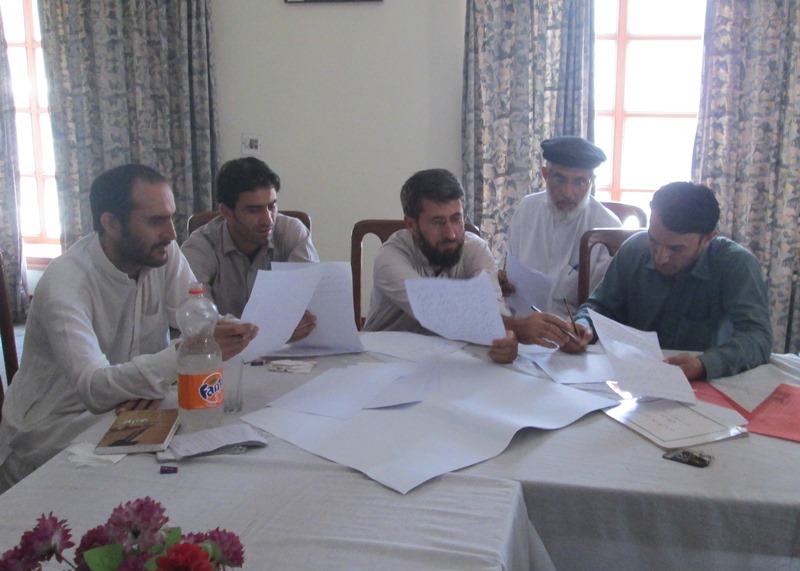
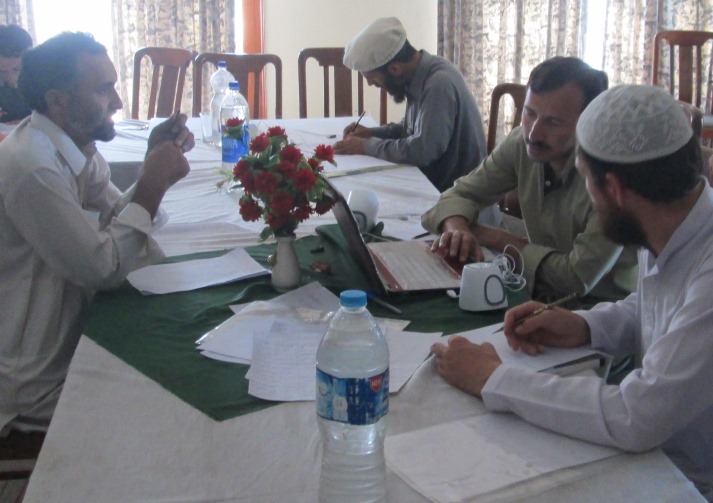
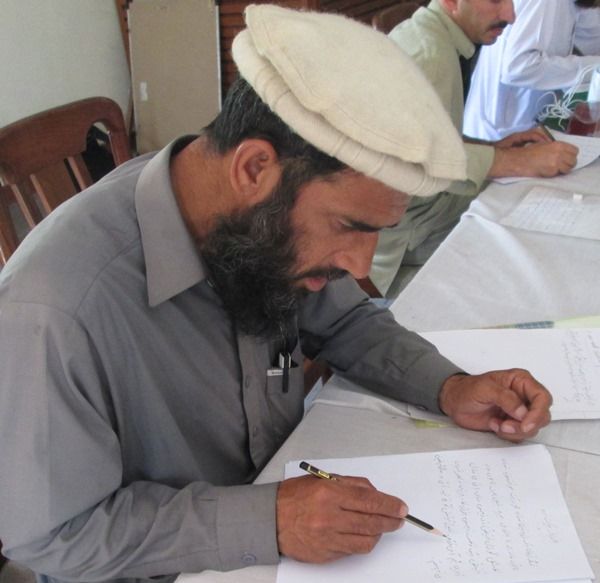
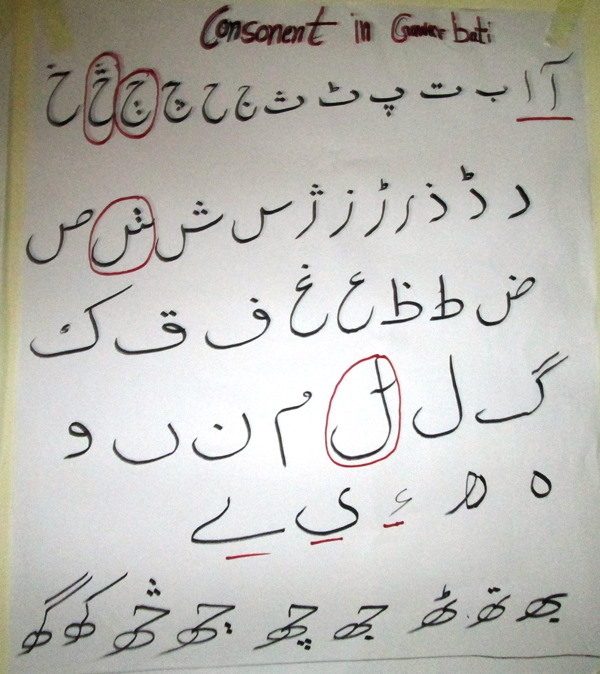
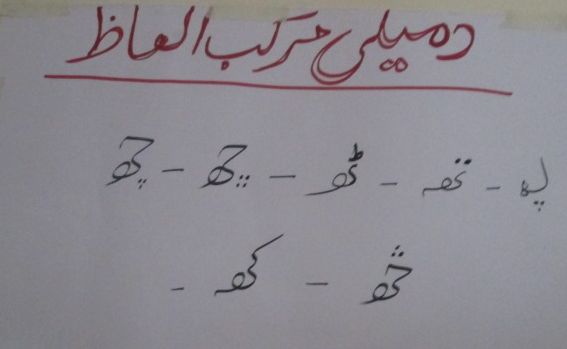
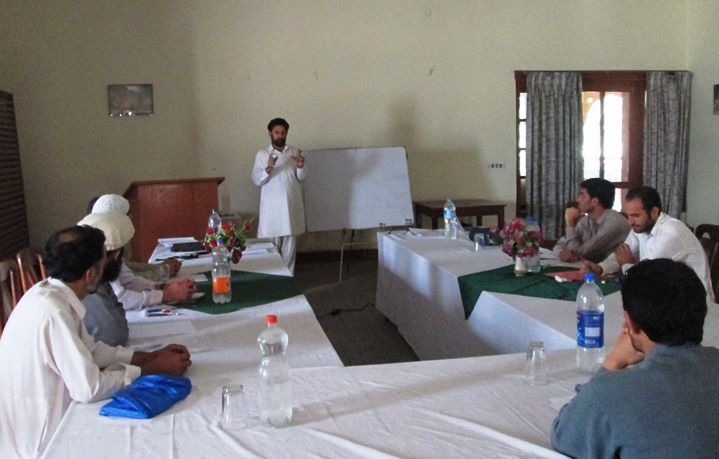
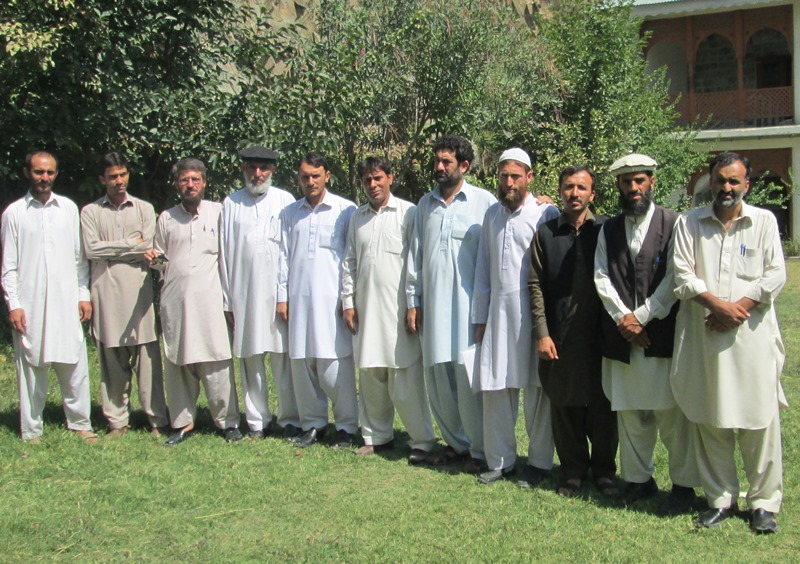
For this project, the Forum for Language Initiatives (FLI) developed and held a week-long orthography workshop for people from the Gawar-Bati and Dameli language groups in Northern Pakistan. The main goals of the workshops were that (1) the participants discover the basic alphabets needed for their language, and (2) that they learn about the benefits of a standardized way of writing their language. To achieve these goals, FLI’s facilitators held an internal preparation session with Dr. Henrik Liljegren from Stockholm University, an expert of these two languages, to prepare for the workshop. The content of the workshop addressed very basic orthography issues. Nine people from two different language communities (Gawar-Bati and Dameli) participated in the workshop. The Dameli group had held a meeting with their language community before coming to the workshop. They were therefore able to share the issues they are facing in developing their orthography. The main outcomes of the workshop can be summarized as follows:
- Participants were able to identify the basic alphabets needed for their language
- Each language team learned about the benefits of a standardized way of writing their language (including script, symbols, and spelling)
- Each language team made progress on writing a report regarding the orthography of their language
- Each language team worked on a proposal for the further development of their orthography and recommendations for how issues in these orthographies could be addressed.
Title: Development of Reading Materials
Country: Malaysia
Language(s): Sa’ban
Grantee: Beatrice Clayre
Year: 2014
Project summary
Sa’ban is a language spoken by a minority ethnic group living in the headwaters of the Baram River in Sarawak, Malaysia. The Sa’ban language, although related to languages such as Kelabit and Lun Dayeh has undergone remarkable sound changes over the years, which makes it difficult for people taught in the national language (Bahasa Melayu), to write or read their own language. The Sa’ban sound system includes voiceless nasal consonants, voiceless lateral and velar consonants and long consonants and vowels which contrast with short consonants and vowels.
The aim of the present project was to finance the printing of two illustrated dictionaries in Sa’ban in order to help the Sa’ban read and write their own language. The dictionaries take the form of trilingual wordlists in Sa’ban, Bahasa Melayu (the language of education and government) and English (to help schoolchildren learning English). The two dictionaries represent two stages. In the first one most words are nouns and each one is illustrated by a drawing. In the second there are fewer illustrations but many more words, including verbs, pronouns, prepositions, and opposites together with typical greetings and some conversation. Both books contain a description of the spelling system. The Sa’ban have used this grant money to print 600 copies of the second dictionary ‘Kamus Sa’ban si’ La’toon’ (ISBN 978-96-13100-0-7). In December 2015, the Sa’ban from Sarawak will have their biennial gathering with the Sa’ban from Kalimantan (Indonesia) and copies of the dictionary will be made available there.
Members of the wider community in Sarawak have been impressed by the dictionary, and one person involved with another minority group (Murik) has asked permission to use the Sa’ban dictionary as a model for preparing a dictionary for the Murik. Another comment came from Dr Poline Bala, Head of the Department of Anthropology and Sociology of the University of Malaysia (Kuching, Sarawak), who wrote “I really like the book and hope to use it as a template for other languages or groups.”


Title: Singpho mother tongue literacy programme
Country: India
Language(s): Singpho
Grantee: Palash Kumar Nath
Year: 2013
Project summary
This grant from FEL has been used to run two workshops aimed at 1) training teachers of mother tongue literacy programme which is being run by the Singpho community and 2) to produce mother tongue literacy materials for the Singpho children to read.
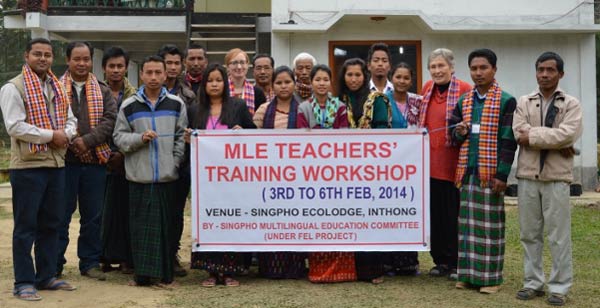
In the first workshop which took place from 3rd to 6th of February, 2014 8 young teachers from both the old and two new mother tongue schools have been trained to use the mother tongue reading materials and method to teach the Singpho children in a non threatening environment. They have been trained to use a Multi strategy Method, popularly known as MSM in which the young learners are provided the opportunity to acquire basic literacy skills through their mother tongue by using their traditional stories, songs and other resources.
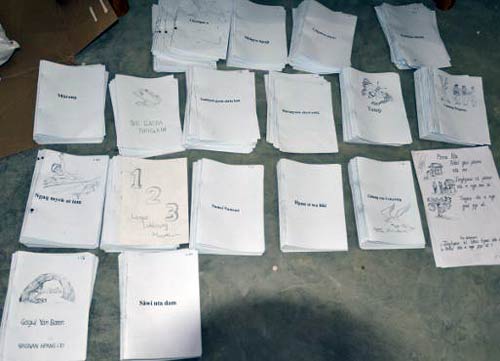
The second workshop which took place from 27th September to 2nd October, 2014 focussed on encouraging the community members, particularly the writers and the teachers to produce reading materials in the Singpho language for their children to read. During this workshop a total number of 19 books both small and big were produced. The production of these books involved three related stages. It started with writing of a story/ songs/ rhyme. In the next step such writings are edited in terms of spellings, appropriateness of vocabulary used and the appropriateness of the content for the young children. Once this is done story is illustrated by an artist. It has been noticed that such illustrations reflect the traditional and ethnic life of the community.
Title: Documentation of endangered genres of the Kĩsêdjê oral literature
Country: Brazil
Language(s): Kĩsêdjê
Grantee: Rafael Bezerra Nonato
Year: 2015
Project summary
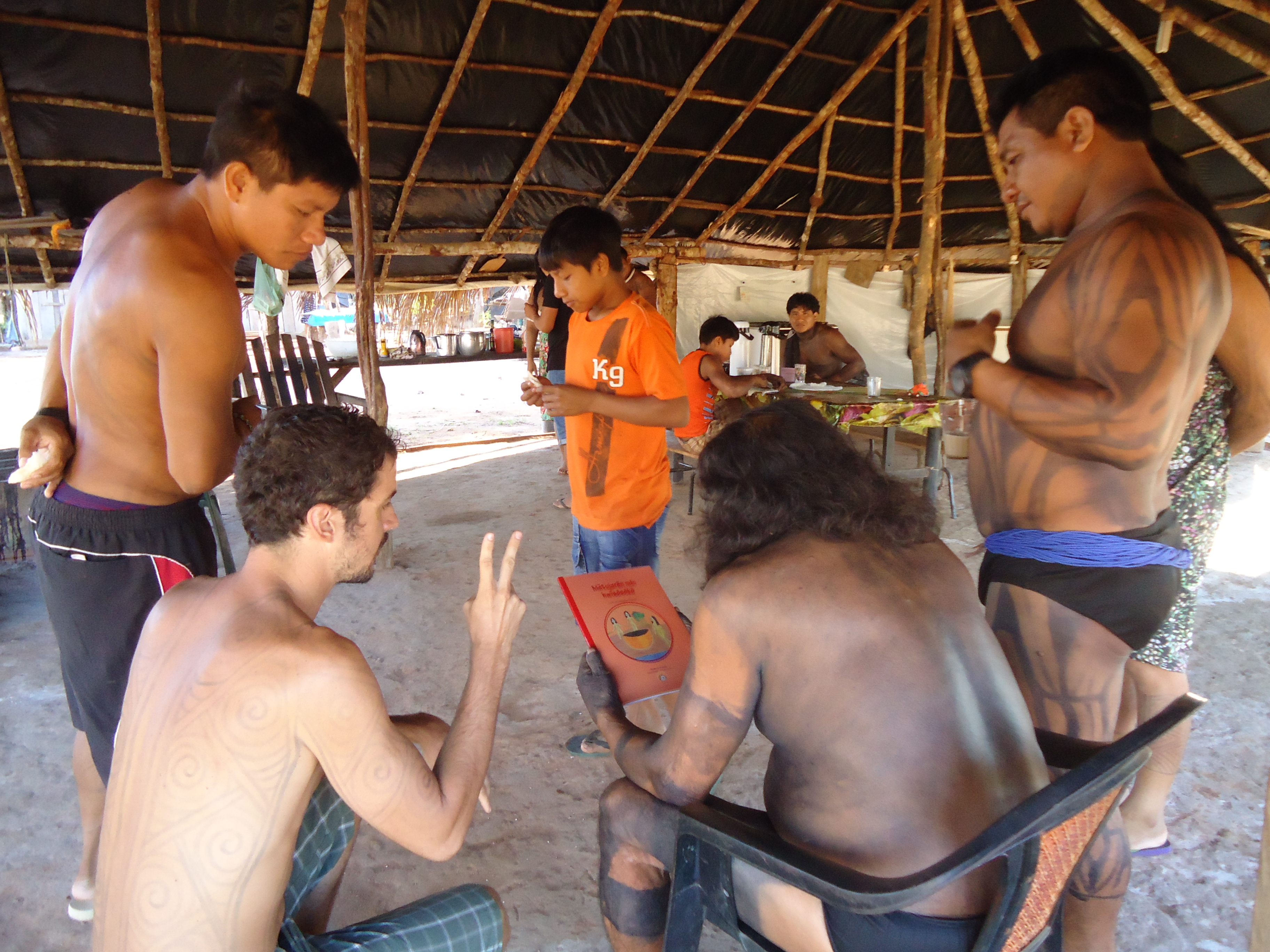
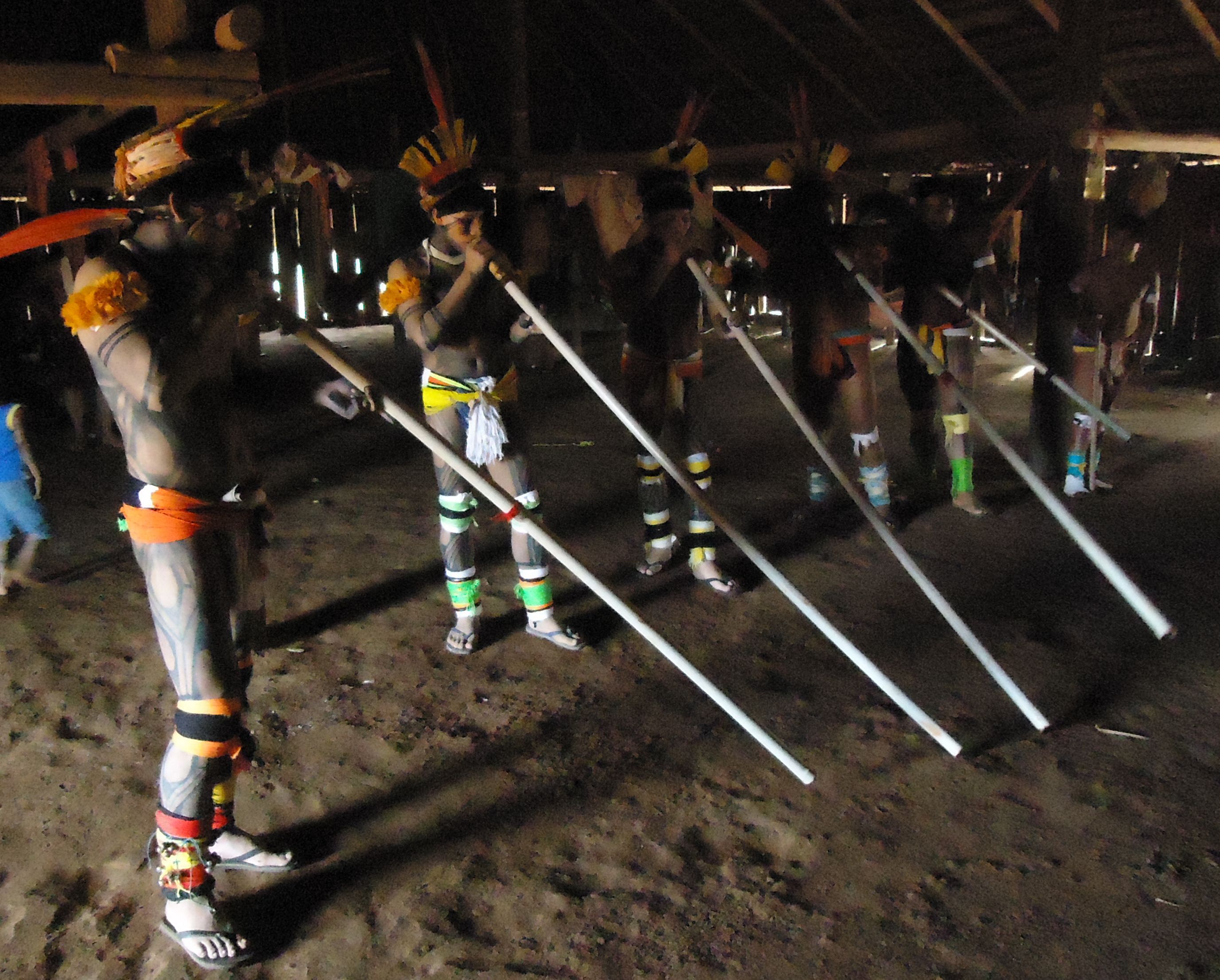
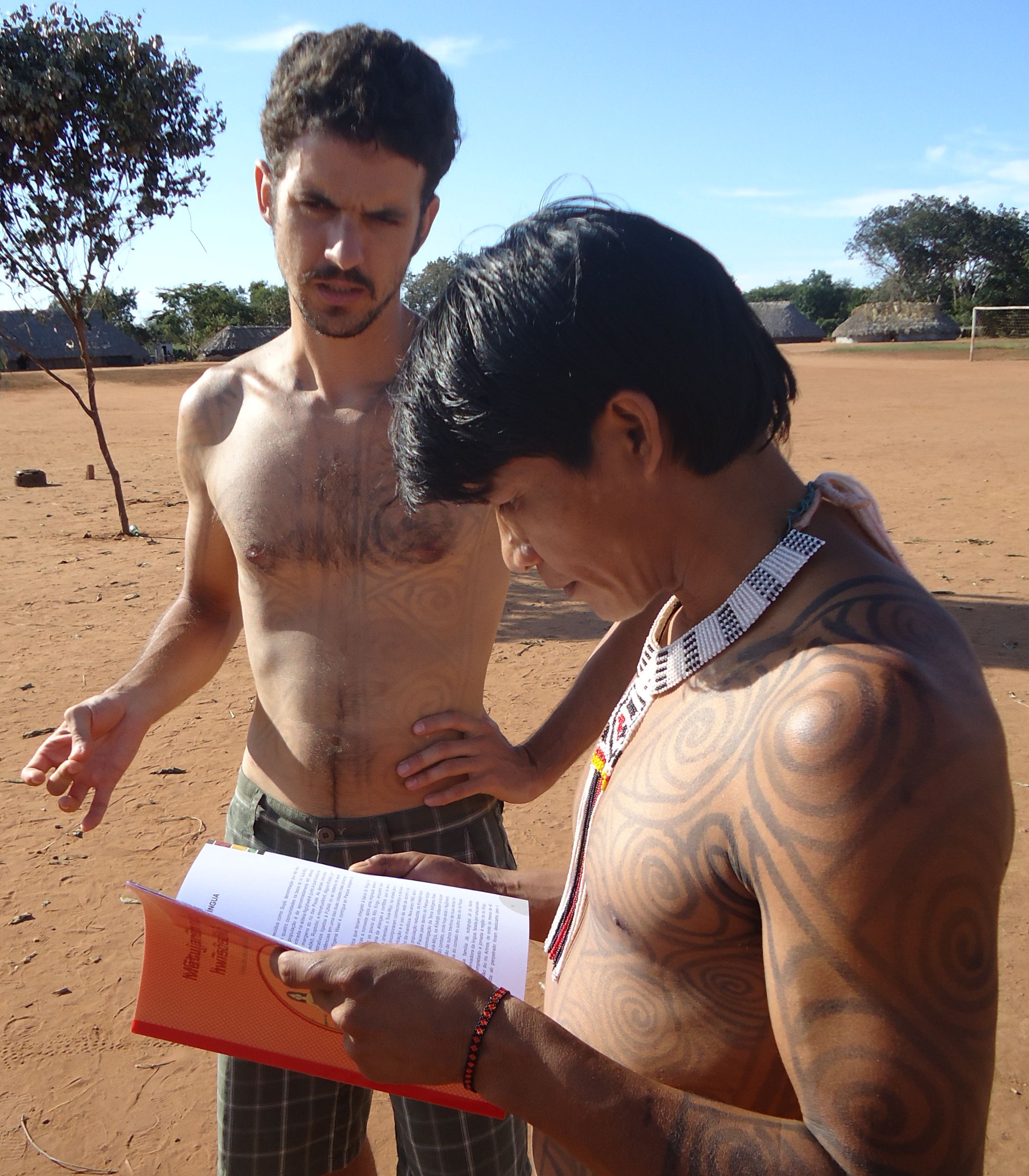
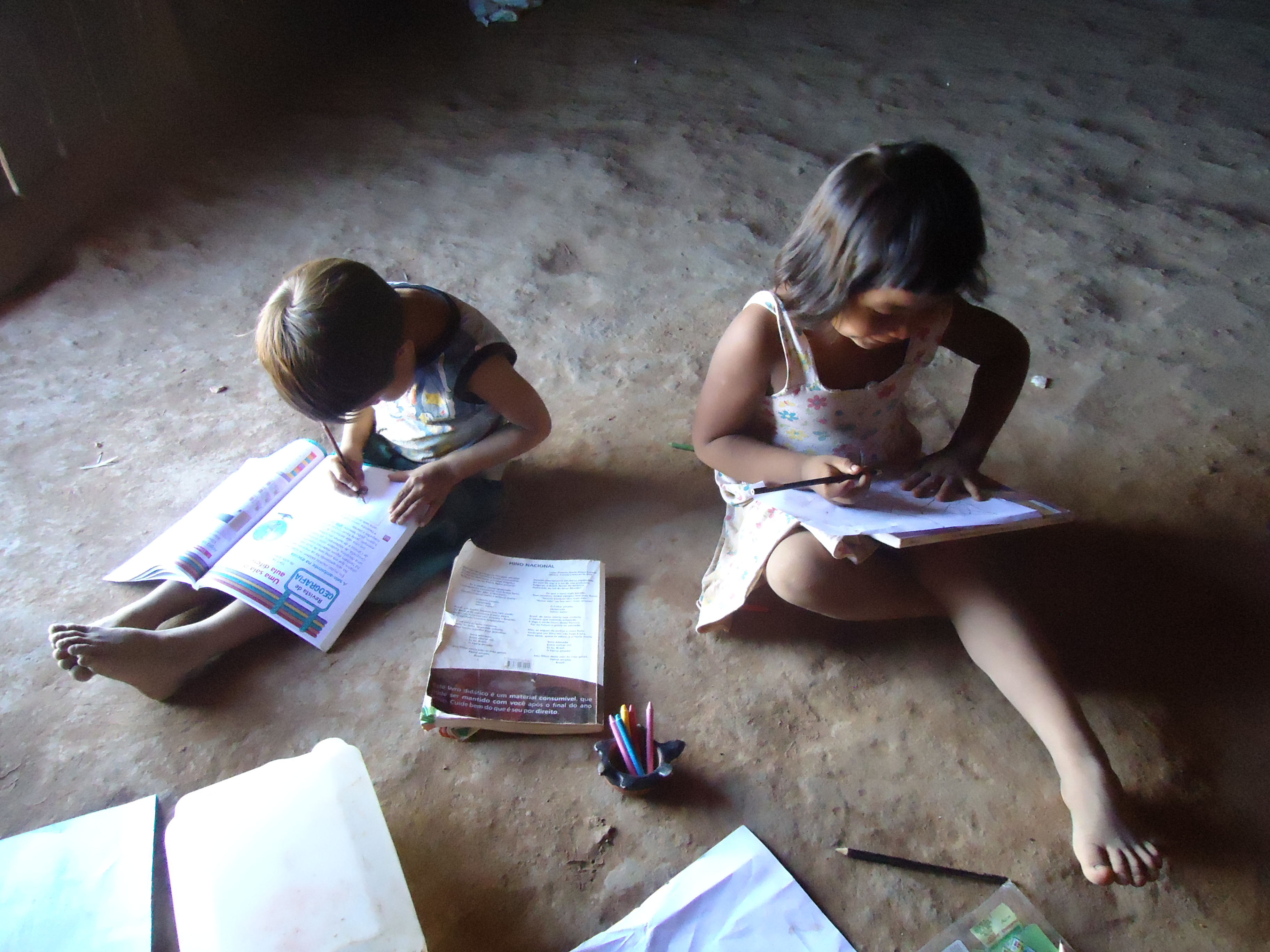
This project continues and builds upon previous work begun in 2008 to document the Kĩsêdjê language as well as its oral genres. Kĩsêdjê has roughly 350 speakers who live in 5 villages along the tributaries of the Suyá river, in the State of Mato Grosso, Brazil. Our team, made up of two Kĩsêdjê speakers and a linguist, have so far produced a grammar sketch, an annotated speech corpus (narratives, interviews, songs and elicited sentences) and a short dictionary. Those products will be expanded and adapted into material for use by the Kĩsêdjê community. The funds were used to finance the next field trip of the project. The main goal of this field trip is to provide training for two native speakers, Mbrynti Suyá and Lewaykĩ Suyá, who are substituting the native researchers that used to work in the project before. They are trained in transcription and translation techniques, in order to work towards the annotation of the recordings made in previous field trips.
Title: Ashéninka Perené (Arawak): Production of a thematic dictionary
Country: Peru
Language(s): Asheninka Perene
Grantee: Elena Mihas
Year: 2013
Project summary
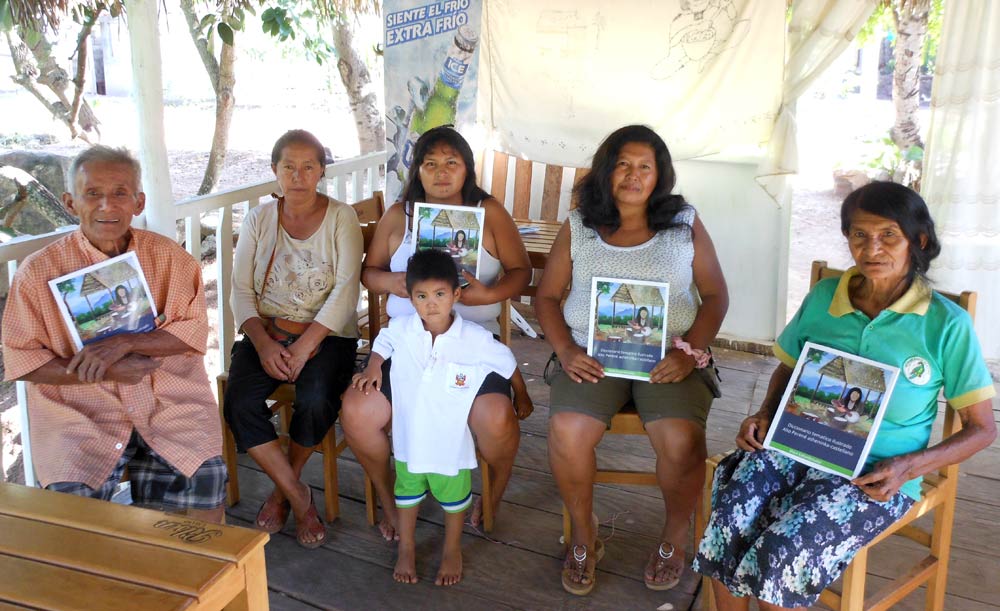
The aims of this project were threefold: (1) provide collaboratively-produced resource materials to bilingual teachers and parents, (2) support the community-generated writing conventions and Ashéninka Perené literacy, and (3) train community researchers in documentary work.
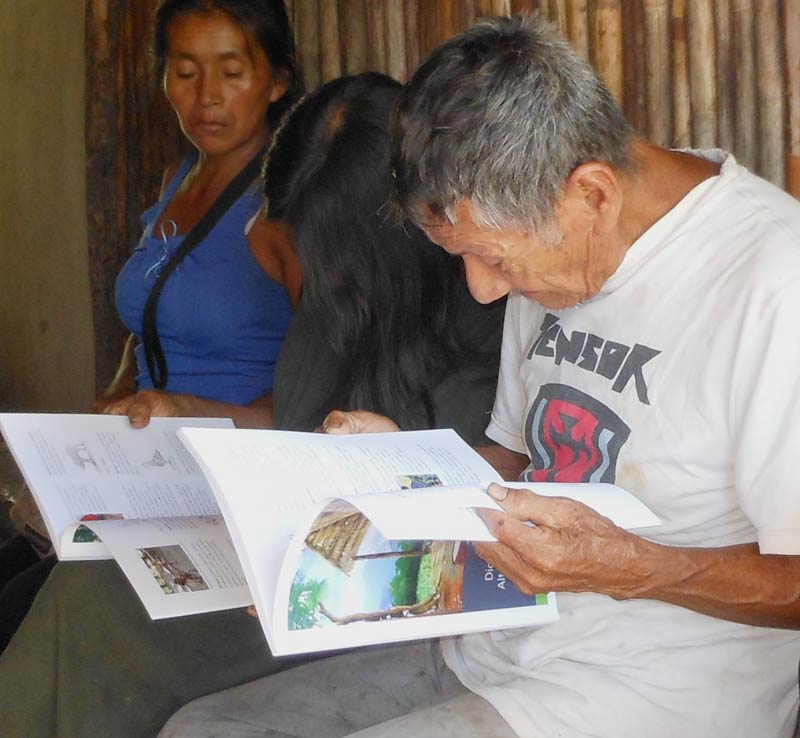
In 2014, a series of consultations with language consultant team members on the issue of writing conventions was carried out. Two primary language consultants were trained in video and audio recording. The main result of the project was the publication of the thematic dictionary produced collaboratively by 39 native speakers from the communities of Bajo Marankiari, Pampa Michi, Pucharini, Mariscal Cáceres, Pumpuriani, Churingaveni, Santari, and Ciudadela (La Merced). It contains ca.1000 headwords, and uses a simplified version of the native alphabet that resulted from the consultations. In April 2014, 50 hard copies of the bilingual thematic dictionary were produced by Clark Graphics, Milwaukee, WI. The dictionary file was published online in April 2014, and an account of the dictionary production was posted online as well.
This outcome is assessed by the community’s leadership and rank-and-file members as the most important contribution of the language consultant team to the community’s struggle for self-determination. Native households, bilingual teachers, and tribal leadership now have a reference material they can use on a daily basis. Additionally, the native-language dictionary production is important for the maintanence of positive native language valuation.
Title: WordByWord – Aprender Minderico: A multimedia software for learning Minderico vocabulary
Country: Portugal
Language(s): Minderico
Grantee: Vera Ferreira
Year: 2013
Project summary
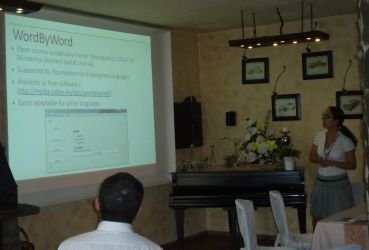
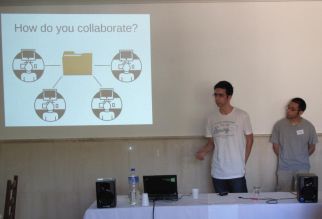
The main aim of this project was to develop a vocabulary teaching software for Minderico which could simultaneously catch the interest of the younger generation for the ancestral language, support language teaching, and reactivate the knowledge of passive speakers.
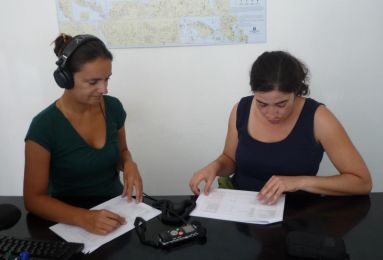
The data collected during previous Minderico documentation projects were used and organized in semantic domains, (e.g. greetings, food, kitchen, kinship terms, clothes, animals, etc.). Each semantic domain correspond to a lesson in the teaching program called WordByWord. To be able to reproduce the authentic pronunciation, the lexemes were audio-recorded, with the help of three language consultants (Elsa Nogueira, Rita Pedro and Pedro Manha). Based on the beta version (WordByWord 0.2.0) created at CIDLeS in 2011, the new version, WordByWord 1.0.0 was created with the new data (lessons, lexemes and sound files). After several workshops, the software is now an integral part of the Minderico lessons at the local school.
The progamme was designed in such a way that it is adaptable to other languages also. To show this flexibility of WordByWord, the download package includes not only Minderico but also two other sample courses (learning Portuguese and Russian for German speakers). More details about the tool can be consulted at the website of the project, where WordByWord can be downloaded for free (for Windows, Mac and Linux): http://media.cidles.eu/labs/wordbyword/
Title: Early Childhood Project
Country: Russian Federation
Language(s): Khakas
Grantee: Anna Vladimirova
Year: 2013
Project summary
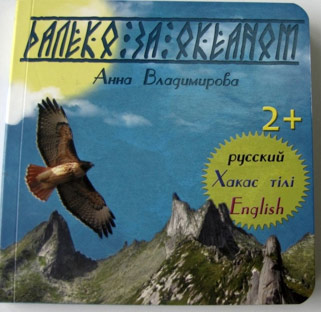
The principal aim of this project was to publish the children's book “Far across the ocean”, translated into Khakas and English. The book contains a rhyme in Russian, oriented towards children from 2 to 7 years old. While I was responsible for designing and editing the book, the translation from Russian into Khakas was made by Sayana Ulturgasheva, one of the notable people of art in Khakasia. The principal theme of the book is the concept of time, hidden in rhymes. The book tells us about different activities that happen far across the ocean, while people are sleeping on the opposite side of the globe.
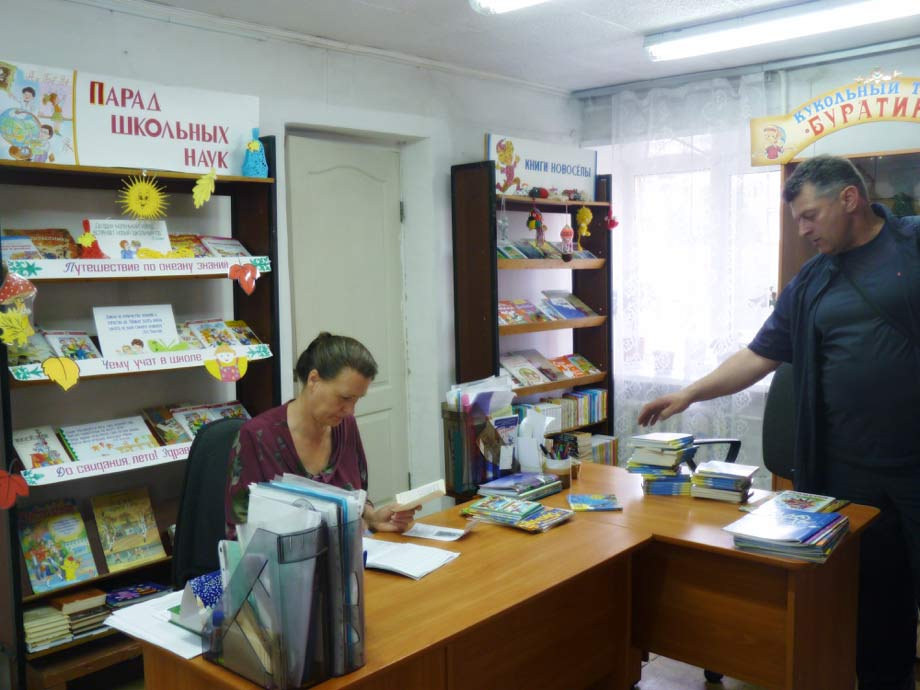
In August 2013, 100 copies of the books were delivered to two kindergartens and a library. In addition, the electronic version of the book was uploaded to the website www.khakasia.com, where Khakas meet, so that book will be available to the wider audience. Since then, the book has been noticed by many people, including those who care about Khakas language promotion and actively promote it, which can be considered as one of the achievements of this project. Further monitoring will be done through communication with the employees of the library and the kindergartens, and by following the number of downloads of the book on the website mentioned above.
Title: Documenting Possession in Miriwoong and Providing Training for Transcription
Country: Australia
Language(s): Miriwoong
Grantee: Christina Murmann
Year: 2014
Project summary
The goal of the Miriwoong project is to create audio and video recordings serving as resources for the in-depth description of possession in Miriwoong, thereby contributing to a more extensive description of this highly endangered language. The elicitation materials were developed in such a way that they elicit possessive structures in an almost natural environment but can also be used as language learning resources. They comprise visual stimuli that were used for story-telling, role-play and language games. The aim of the games was to match or collect pairs of pictures using verbal interaction resulting in such sentences as I have one big yellow bag, do you have three small yellow bags? or The didgeridoo belongs to the old man or The fish has many scales. To represent all areas of possession the pictures and drawings for the games were chosen so that they included humans, animals and objects. They also represented different numbers, colours and conditions (such as whole or broken axes). To make the stimuli particularly useful and appealing, photos of local people and artefacts were included and feedback from the community on the cultural adequacy of the stimuli was incorporated.
The second goal of the project consisted in providing training to the language workers at the local language and culture centre. During my field stay they took part in extensive transcription training allowing them to be involved in the project and empowering them to transcribe valuable older recordings by themselves.


Title: Production of a dictionary
Country: Papua New Guinea
Language(s): Nungon
Grantee: Hannah S Sarvasy
Year: 2014
Project summary
The Nungon Dictionary Project was conceived of as a project to result in a Nungon-English dictionary, based on Nungon-speaking community input from 2011-2013. The original plan was to print Nungon dictionaries for community members. In a field trip in July/August 2015, however, community members decided that a more pressing concern for them was documentation of Nungon terms for rainforest flora. They identified a pressing need for printed Nungon-language ethnobotanical materials. With their guidance, the Nungon Dictionary Project was then redirected toward ethnobotanical documentation, with a Nungon Botanical Dictionary as principal output. This Dictionary was to be published purely in Nungon, with local families and schools as the primary users.
In August 2013, several Nungon speakers painstakingly collected tokens of over 300 different rainforest plants, pressed them, and collated them in plastic-leafed binders. Most importantly, these speakers entered information on each plant into a digital database, including its Nungon name, relationship to other plants in the Nungon taxonomical system, physical description, fruit, seed and flower description, traditional uses, and animal or human consumers.
In July/August 2015, Nungon speakers pointed out to me that some of the tokens from 2013 had rotted or had been eaten by insects. They proposed that a more permanent record be created in the form of the Botanical Dictionary, with photographs of as many of the plants as possible next to their descriptions. All text in the Dictionary would be in the Nungon language to ensure community control over information on medicinal uses of certain plants, for instance. One Nungon speaker took over 750 photographs of over 520 plant species, including those of the original collection but also including some that had been overlooked then. Working with that speaker and others, I compiled information on the plants that had not been included in the original database.
I then combined these photographs with all the descriptions in the Nungon Botanical Dictionary, organized according to Nungon taxonomical categories. The resulting dictionary will be printed by the Summer Institute of Linguistics (SIL) Press in full colour by March 2016, to be transported to the Nungon-speaking area by Summer Institute of Linguistics Aviation by June 2016. The books have not yet been printed, since the logistics of delivering them to the community have not yet been planned.


Title: Using language games to document Possession in Miriwoong
Country: Australia
Language(s): Miriwoong
Grantee: Christina Murmann
Year: 2015
Project summary
The aim of the project is to spur the documentation of the highly endangered Miriwoong language, which is spoken fluently by no more than 20 elderly speakers in Western Australia. In particular, the project will describe the linguistic structures involved in expressing possession. During a field trip in 2014, data was gathered with the help of tasks and language games which encouraged speakers to produce sentences containing possessive constructions such as I have a big yellow bag, The didgeridoo belongs to the old man or The fish has many scales. The second fieldtrip in 2015 was dedicated to clarify questions arising during transcription and analysis of this data and carrying out revised versions of the games with additional speakers to test hypotheses and allow for possible variation in the language.
The data was mainly gathered during two fieldtrips since especially senior speakers feel much more confident on their traditional country than in an office environment. Younger speakers benefitted from language session with senior speakers as well as two training workshops on transcription and media equipment. Transcription skills were enhanced and the way was paved for engrossed independence.
Some possessive structures in Miriwoong were potentially influenced by Aboriginal English or Kimberley Kriol, the mother tongue of most younger Miriwoong people. Therefore, during this trip presumably relevant sentence where elicited in Kriol.


Title: We Begin to Write: Creating and Using the First Nabit Orthography
Country: Ghana
Language(s): Nabit
Grantee: Robyn Giffen
Year: 2014
Project summary
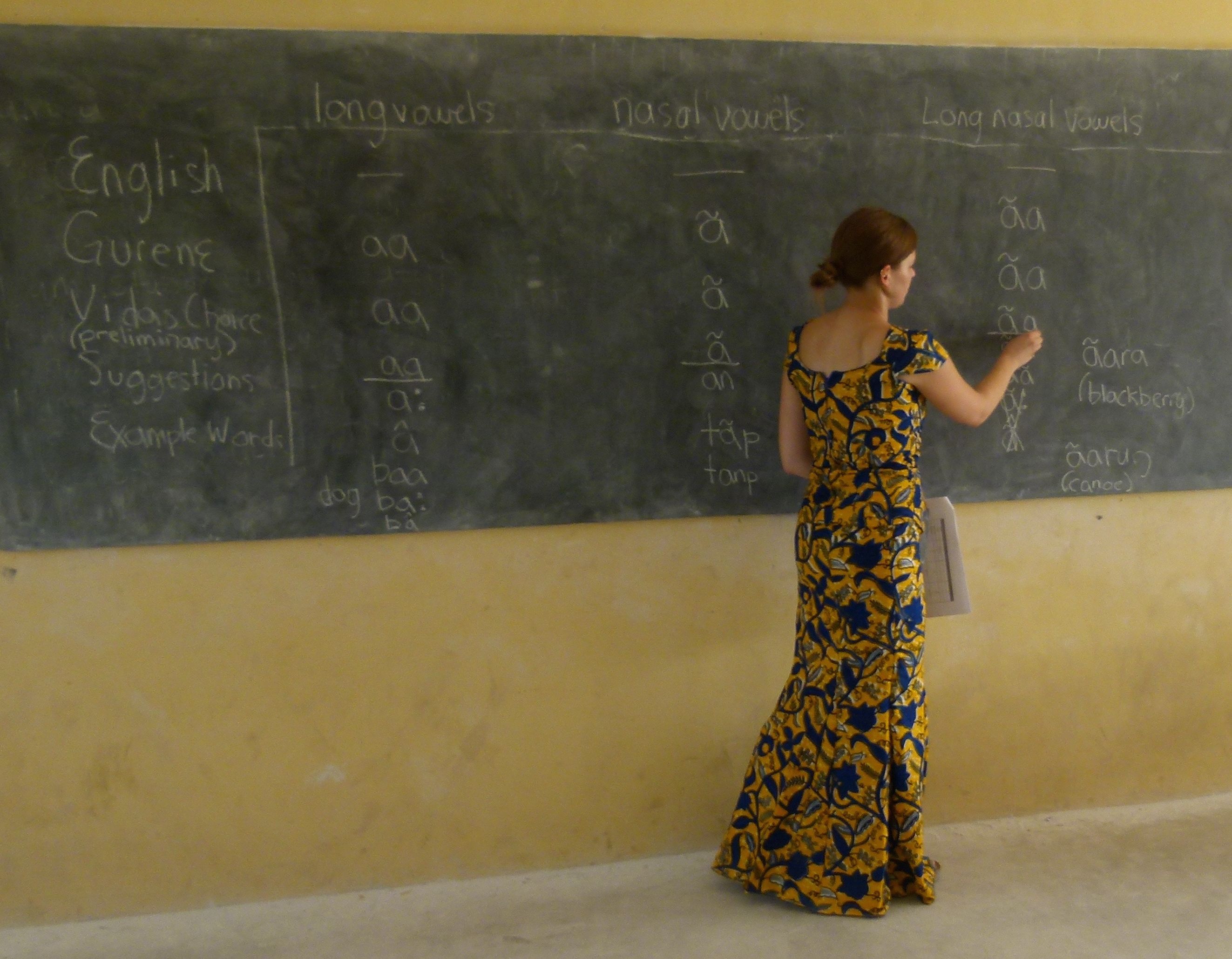
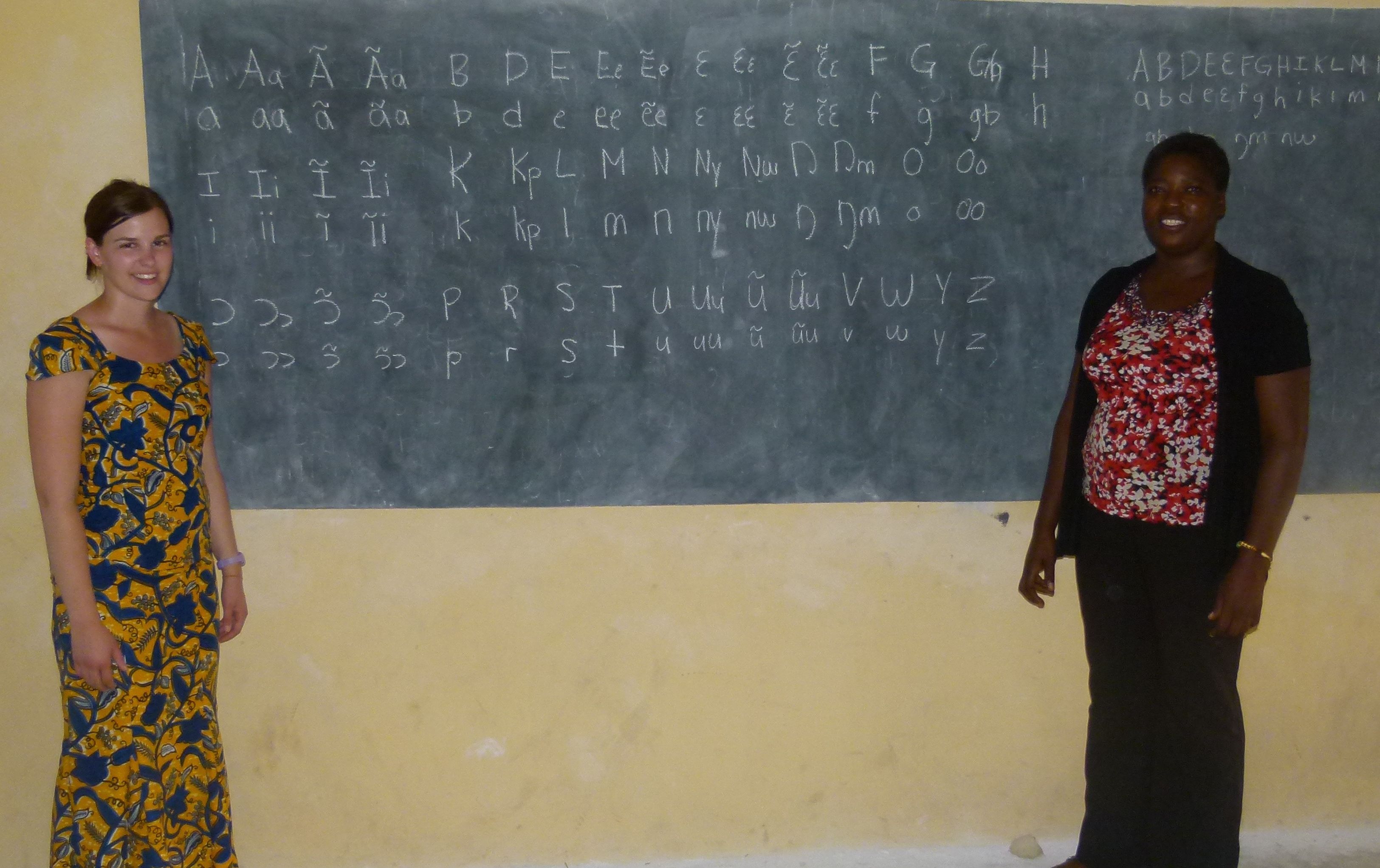
The main goals of this project were to document speakers of the Nabit language, work with the Nabit Language Committee to develop an orthography for the Nabit language, and create materials to help people learn to use the orthography. This project also aimed to help maintain and revitalize this endangered language.
To conduct this project I travelled to Ghana for six week from May 2014 till June 2014. During these six weeks I interviewed thirteen Nabit speakers and met with the Nabit Language Committee twice to finalize the Nabit orthography. My interviews were designed to document the phonology, meaning the sounds, of the Nabit language and understand how Nabit speakers felt about their language. Along with helping to develop the Nabit orthography, I was interested in investigating how community members felt about the potential of a having Nabit orthography and how they felt about their language in general.
Following my language interviews and extensive phonology review, I hosted an Alphabet Design Workshop to assist the community in developing the orthography. During this workshop I made suggestions to the Nabit Language Committee about how each sound could be represented and the committee came to consensus to decide on each symbol that would be included in the orthography.
At the end of the workshop the committee members were able to practice writing in the new Nabit alphabet by translating words needed for some Nabit storybooks that were being produced. Now, one year after the alphabet workshop and the first storybooks were published, we are working on revisions to the storybooks to correct errors and change spellings, translating the storybooks to be fully in Nabit, and working on the first draft of a Nabit Alphabet Book that can be used in schools and adult education programs to teach Nabit speakers how to use the orthography.
Title: Tanacross Athabaskan Texts
Country: USA
Language(s): Tanacross
Grantee: Gary Holton
Year: 1999
Project summary
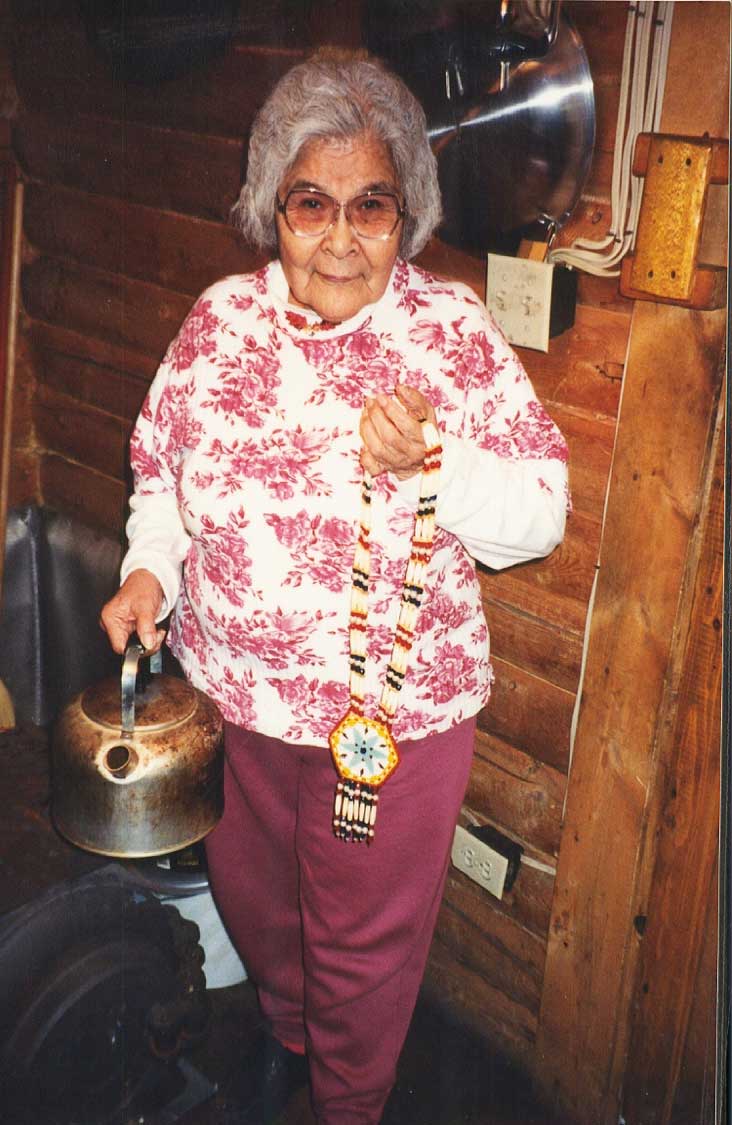
The goal of this project was to record, transcribe and translate several traditional stories in Tanacross, a highly endangered Dene (Athabascan) language spoken in Eastern Alaska. At the time this work was proposed there were about 60 fluent speakers of Tanacross; today fewer than 30 remain.
We were able to record more than 30 hours of stories using high quality audio and video recording. Just over 10 hours of that has been transcribed and translated. Some of these stories were published in the recipients University of California Santa Barbara dissertation in August 2000. Another collection of stories by renown Tanacross storyteller Laura Sanford (b. 1928, d. 2010) is currently being edited for publication under the title
Title: Andajin
Country: Australia
Language(s): Andajin
Grantee: Thomas Saunders
Year: 2002
Project summary
The goal of the project was to record some of the Andajin language of the Worrorran language family of the Kimberley region of Western Australia from the last 2 speakers with the aim of producing a wordlist. Although Andajin is closely related to Ngarinyin, a more widely spoken language, it has also been influenced by its south-westerly neighbour Bunuba. No one had ever documented Andajin language or knowledge of Andajin country before. Andajin was critically endangered (in 2003) and had not been spoken regularly by people for a long time. The speakers were men in their 80s. One used the related language Ngarinyin more commonly. The other used the language Gija more.
I worked with one speaker at Imintji community in Ngarinyn country in 2003 and in 2004 I travelled with the other speaker and some of his family to Andajin country (about 5 hours from Derby). I recorded Andajin words, including place names and songs
The outcomes of the project were a wordlist, audio recordings of words, place names and sentences, songs and photos of significant places in Andajin country. The last speaker died in 2012, so Andajin is now extinct, although some Ngarinyin speakers remember words and phrases.


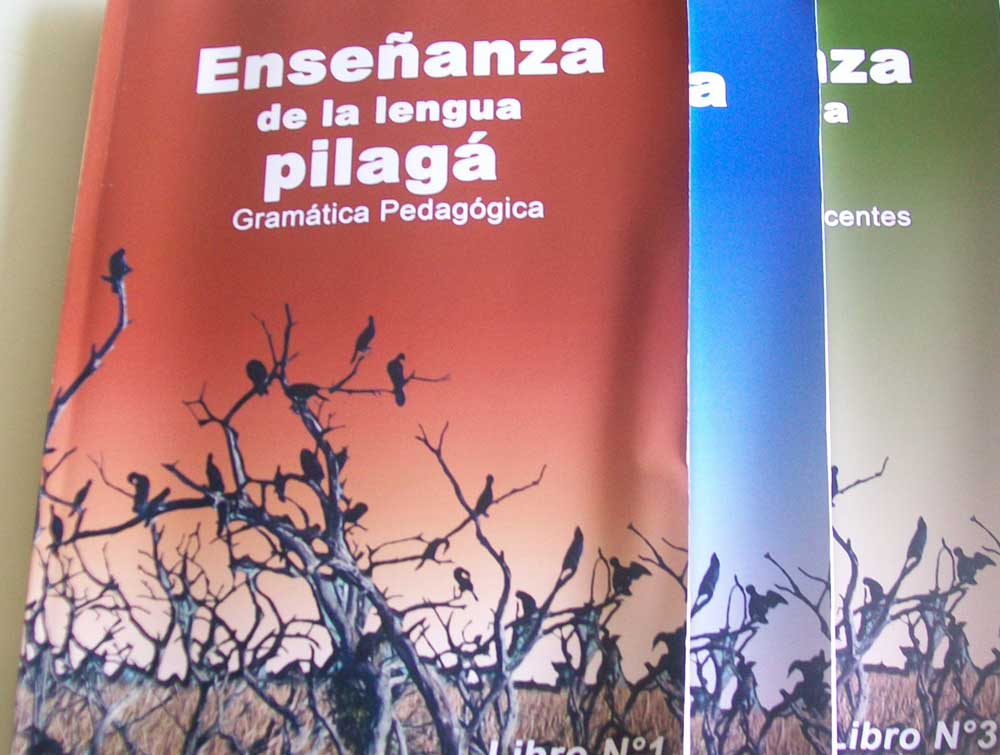
Title: Pilagá pedagogical grammar
Country: Argentina
Language(s): Pilagá
Grantee: Alejandra Vidal
Year: 2004
Project summary
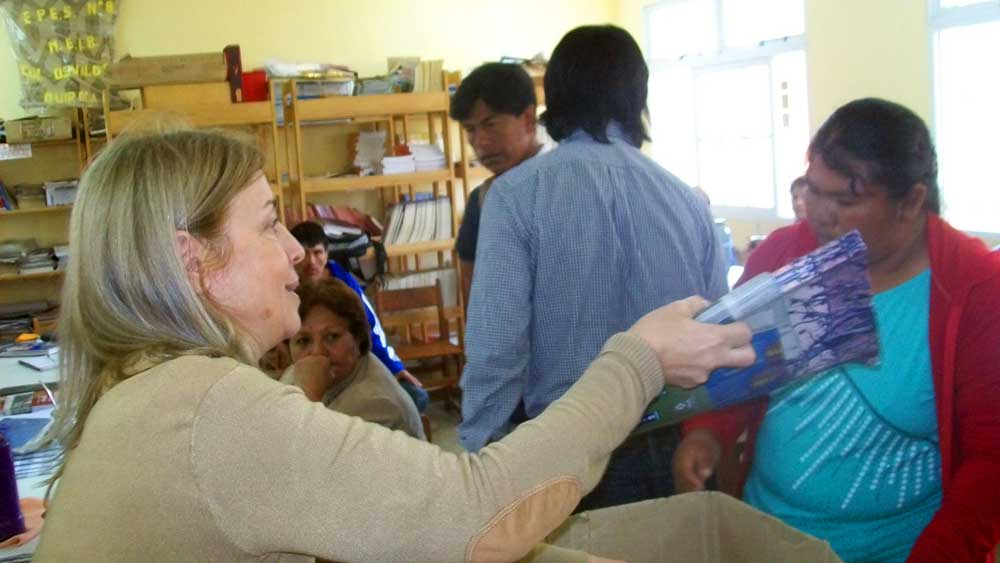
The project aimed to develop a series of books to facilitate teaching Pilagá, a language spoken in northeastern Argentina by 5000 people. The resulting material focuses on particular points central to the grammar and expressions in the language. Grammatical categories and rules are explained, in a simple and comprehensible fashion.
The series consists of a study book or text book, a book of activities and readings to be done by the students, and a separate book for Pilagá teachers with suggested extra activities. Students’ activities are thought in a integral way, that is to improve their skills for listening, speaking, reading and writing in Pilagá. These have actually become the only resources in use by Pilagá students and their teachers.
Title: Documentation of the obsolescent language of the Vasyugan Khanty
Country: Russia
Language(s): Vasyugan Khanty
Grantee: Andrei Filtchenko
Year: 2004
Project summary
The project documented the endangered dialects and cultural heritage of the Vasyugan Khanty people. The activities were focused on obtaining language data and metalinguistic information to compile a grammatical description and archive the data.
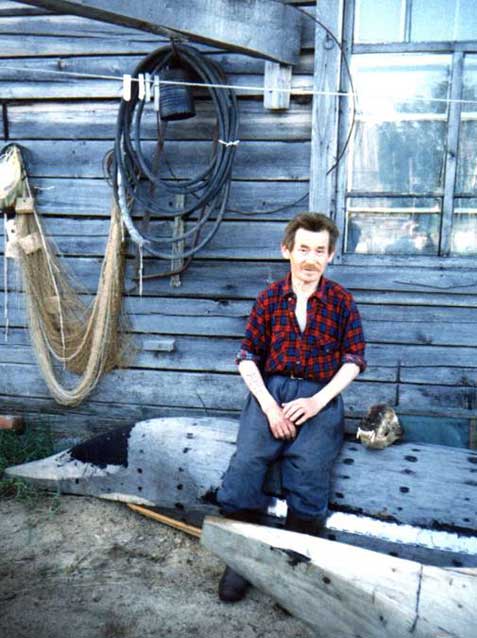
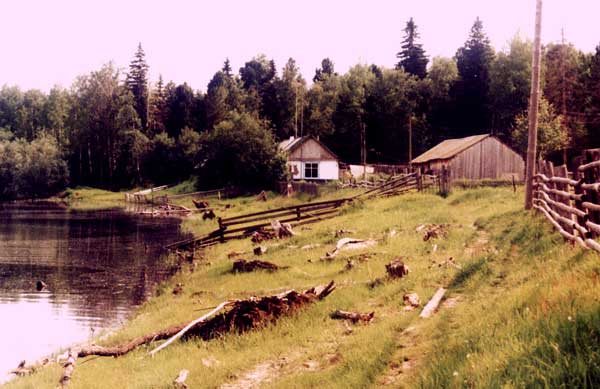
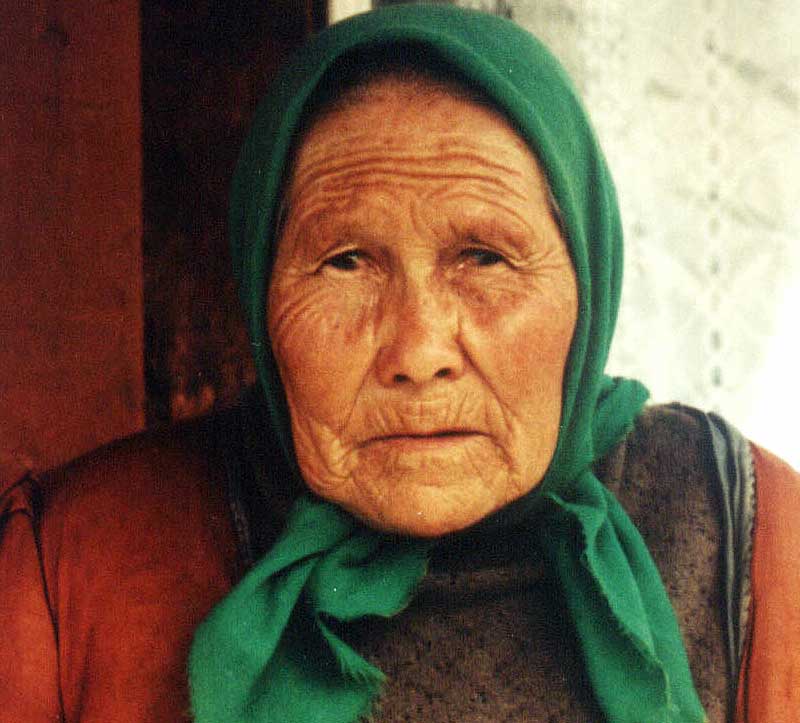
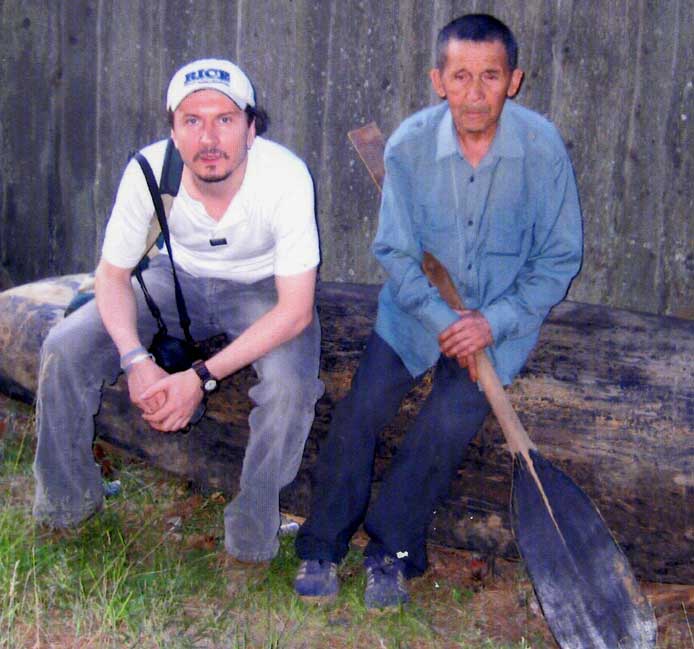
The degree of endangerment of the dialects is extremely high, as most of the last speakers (fewer than 50) were aged 60 and over, placing this language in danger of extinction within a single generation. Vasyugan Khanty speakers live in villages along the Vasyugan river, a tributary of the Ob river in Western Siberia. They constitute less than 2% of the Khanty ethnic population. Historically and presently they have been relatively small in number in Tomsk and Tyumen regions and live remotely from the other Khanty groups. Today the Vasyugan Khanty have been deprived of their traditional territories, activities and language. They survive as tiny minorities in some villages. Unlike other native Siberian groups, Eastern Khanty have always had less attention from researchers and minority rights and environmental activists.
Data collected in this project was the core of a database used for consequent studies on Eastern Khanty language and culture, contributed to documentation of linguistic and cultural diversity in Siberia, led to publication of scholarly articles, and a grammar of the Vasyugan Khanty language.
Title: Resuscitating Kiong language
Country: Nigeria
Language(s): Kiong
Grantee: Margaret M. Okon
Year: 2004
Project summary
The project aims at a descriptive analysis of the phonological features of Kiong with a view to providing a standard orthography that would pave the way for the production of primers and other literacy materials. This will contribute towards the safeguarding and promotion of the linguistic heritage of the world. The search for natives of Okoyong who speak Kiong was like a wild goose chase. From personal communication, it was gathered that the well-known Scottish missionary, Mary Mitchel Slessor, who lived and worked in Okoyong from 1888 used the Efik language throughout her stay in Okoyong, an indication that the language had ceased to be in use since the 19th century.
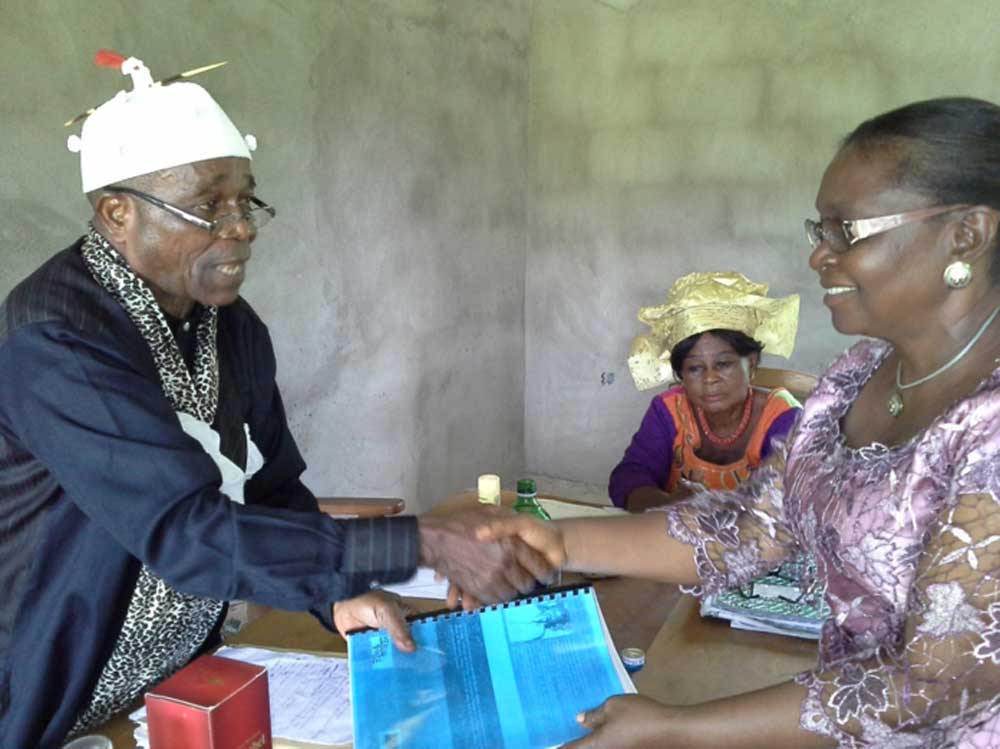
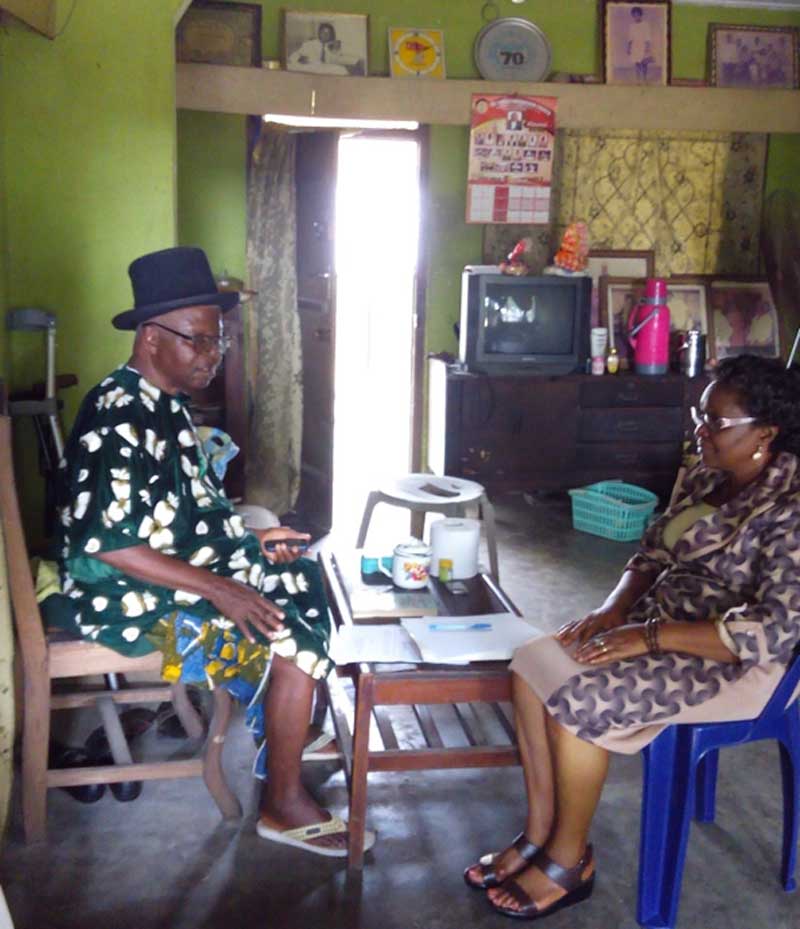
Eventually, we found Obonn Eyo Otu Ekpenyong, a retired civil servant, who is very passionate about the Kiong language. He became our principal informant. The pictured article is the fruit of several sessions that my colleague and I had with him, Mr. Nsa Ita Okon and Miss Atana Okon. A variety of the language is also alive in Cameroon and Akamkpa in Nigeria, where it is known as Durop, Korop or Ododop.
Now in 2016, we are currently reviving the project with town hall meetings with traditional rulers and stakeholders from the several clans in Okoyong.
Title: A Reference Grammar of Barombi
Country: Cameroun
Language(s): Barombi/Lombe
Grantee: Gratien G. Atindogbe
Year: 2005
Project summary
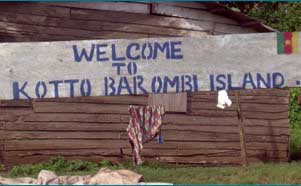
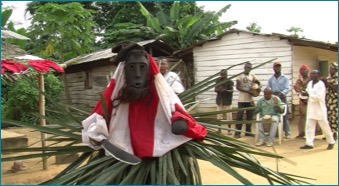
The overall aim of this project was twofold: 1) provide a documentation of the Barombi language for archiving; 2) provide the Barombi speakers and other interested persons with a grammatical book which will be easy to read and to understand. The book, titled A Reference Grammar of Barombi is of descriptive nature and rigorously data-oriented.
The research consisted of the analysis of data collected in the villages where Barombi is spoken. The collection was done through tape recordings of word lists, short sentences, riddles uttered by native speakers, as well as through the video recording of a "variety of spoken and written language samples collected within their appropriate social and cultural context" (Himmelmann 1998, Woodbury 2003). Narrative texts, songs and interviews were also used.
Among the outcomes are A Reference Grammar of Barombi (ongoing), a short volume on the history of the Barombi Kotto people (under review), and a trilingual and multientry dictionary of Barombi-English-French, English-Barombi and French-Barombi (ongoing).
Title: Archiving recorded Wasco language materials
Country: USA
Language(s): Wasco (Chinookan)
Grantee: Erin F. Haynes
Year: 2005
Project summary
Wasco, a member of the Chinookan family, is a critically endangered language from the Columbia River region in the northwest United States. In 2005, there were two remaining known native speakers of Wasco, both over the age of 85. They were part of a larger language revitalization project at the Confederated Tribes of Warm Springs, joined by two apprentices and youth workers.
By 2005, members of the Wasco Language Team had collected more than 300 recordings of Wasco conversations, lessons, and other language materials. However, overwhelmed by their revitalization work, the team had not had sufficient time to archive and document the materials. Most of the recordings were on cassette tapes, stored in boxes without documentation or back-ups. In consultation with the Language Team, I developed a system for reviewing each tape, recording content descriptions and relevant metadata into the Tribe’s Language/Cultural Archive database, and digitizing each tape for long-term archiving. I used the system to review approximately one third of the recordings and trained two youth workers to continue the task upon my departure.
Since 2005, both native speakers of Wasco have unfortunately passed on. The Wasco Language Team continues their incredible revitalization efforts, now relying exclusively on archived language materials.
Title: Support to the Karaim community in Lithuania in their efforts to revitalize the highly endangered Karaim language
Country: Lithuania
Language(s): Karaim
Grantee: Éva Ágnes Csató Johanson
Year: 2007
Project summary
The project aimed at giving support to the revitalization of the highly endangered Karaim language spoken in Lithuania. It resulted in publishing teaching material to be used in the annual Karaim Language Summer Schools in Trakai financed by the Swedish Institute.
Karaim is a Turkic language which has been spoken in Lithuania for more than six hundred years. The maintenance of the language is of vital importance for practising the community’s Mosaic religion. The Karaim are readers of the Hebrew bible but the texts and prayers are translated into their Turkic language. The Karaim religion was not openly practiced during Soviet times. After the fall of the Soviet regime, the Lithuanian government recognized national minorities giving them rights to practise their religion and set up their own administrative structures. The Karaim Cultural Society is engaged today in extensive religious and cultural activities.
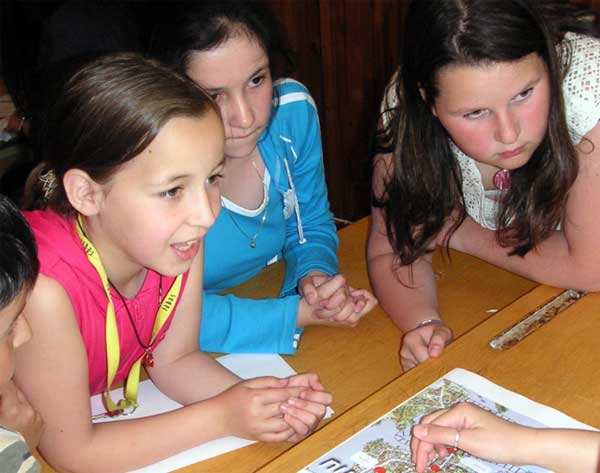
Title: Linguistic study of Chhatthare Limbu
Country: Nepal
Language(s): Chhatthare Limbu
Grantee: Govinda Bahadur Tumbahang
Year: 2007
Project summary
Chhatthare Limbu is spoken in the Dhankuta and Terhathum districts of eastern Nepal by approximately 30,000 people. It is a complex pronominalized, eastern Kiranti, Sino-Tibetan language.
The goal of the project was to prepare a grammar of Chhatthare Limbu in a standard dialect so that text books and reference materials could be produced to run classes in Chhatthare Limbu. The Chhatthar Limbu area was divided into fifteen sites and sample subjects were chosen from each of them. Word lists were collected from each site and they were compared. Then, story in local tongue was recorded in each site and it was played to another site to test their intelligibility. Then, a dialect mapping method was used and personal interviews were conducted to acquire additional information about dialectal variations. Banchare proved to be the standard dialect.
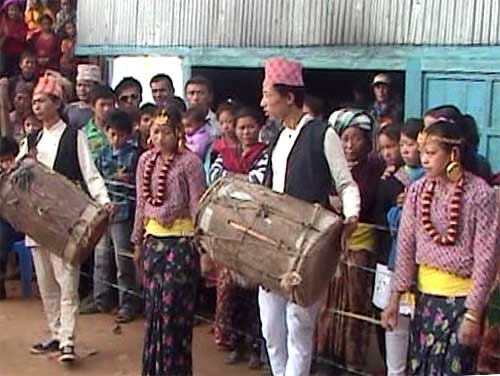
Title: Building of an Isbukun Bunun Corpus
Country: Taiwan
Language(s): Isbukun Bunun
Grantee: Shuping Huang
Year: 2009
Project summary
Isbukun Bunun is an Austronesian language spoken in central-southern Taiwan. The elder generation uses Isbukun Bunun actively in their daily conversation; however, under the influence of Han culture, the number of fluent speakers is decreasing.
I started collecting stories and narrations by the elderly since 2009, aiming to document and preserve Isbukun speech data for the potential of its revitalization and for language/culture diversity of Taiwan. The stories they told were video- and/or audio-taped, transcribed, and glossed morpheme-by-morpheme. A vocabulary list was also compiled. Documented in Chinese and English, our corpus will allow more people to appreciate the beauty and particularities of Isbukun Bunun. Seven indigenous elders were invited to join us. Among them, Priest Anu Ispalidav† was fascinated by the grammar of his own language, and wrote a book on Isbukun Bunun morphology after the completion of my project.
See the project website https://sites.google.com/site/bununcorpus (in Chinese because most users of Isbukun Bunun are also speakers of Taiwanese Chinese).


Title: Baure: the first steps towards teaching materials
Country: Bolivia
Language(s): Baure
Grantee: Femmy Admiraal
Year: 2011
Project summary
Baure is an Arawaken language spoken in the Bolivian lowlands in the department Beni, close to the border with Brazil. The speakers of Baure are all elderly people who are fully bilingual in Spanish, the dominant language in the region.
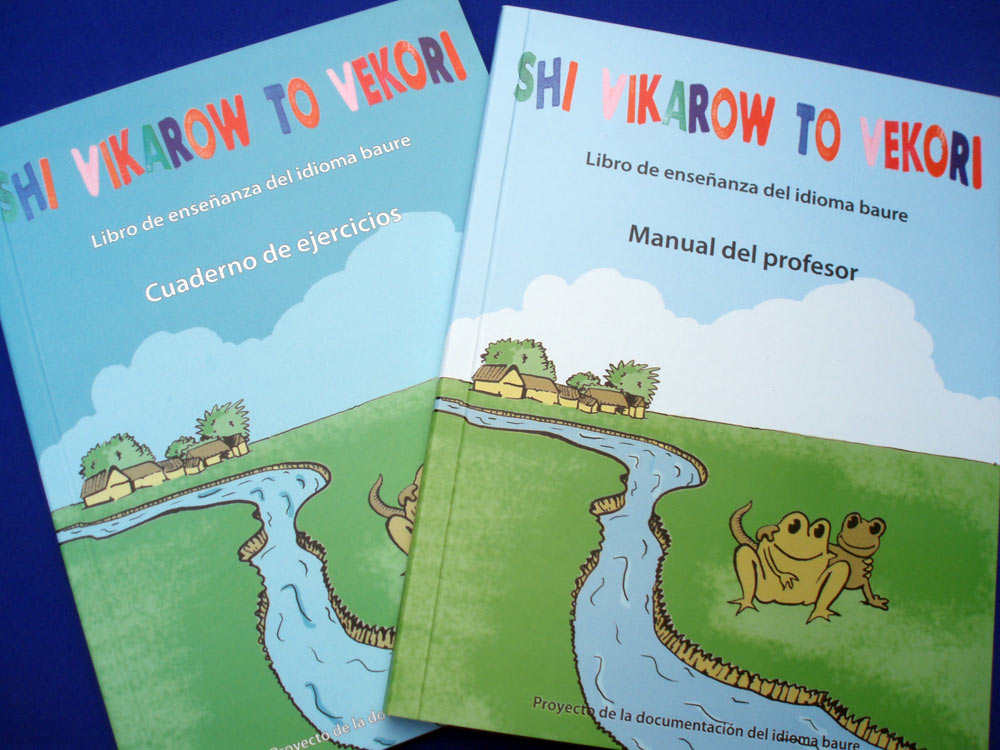
This project proposed the elaboration of teaching materials in Baure, together with the local teachers, in order to support revitalization of the language.
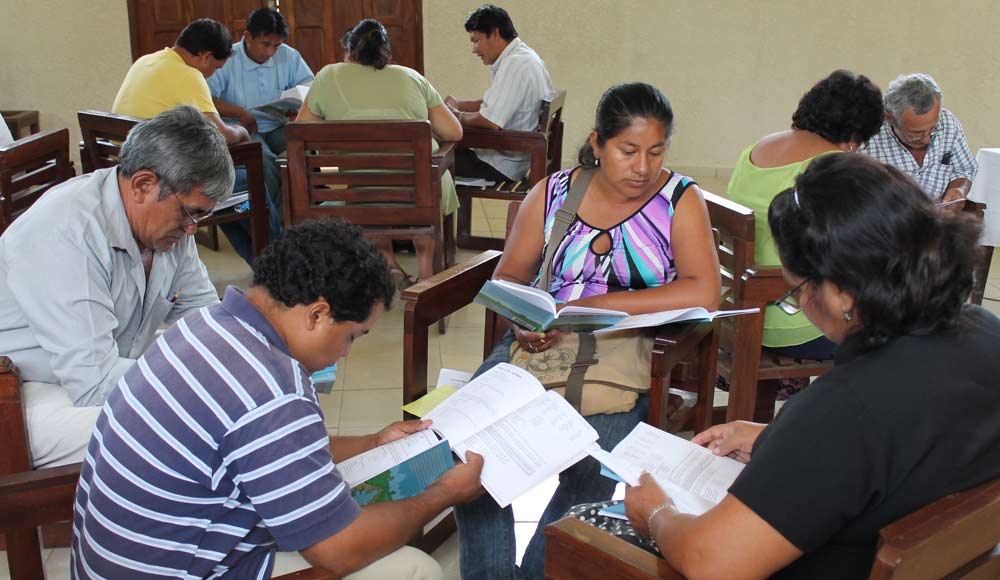
The outcome of the project consists of an exercise book and a teacher’s manual, including a detailed grammar section and an audio CD for listening exercises. In addition, workshops were organized to introduce the school book to the teachers. Approximately 80 teachers participated with great enthusiasm. Because the teachers are not Baure speakers themselves, the workshops focused on how they can work with the materials and learn the language together with the children.
Title: A Tangam Community Dictionary
Country: India
Language(s): Tangam
Grantee: Mark Post
Year: 2013
Project summary
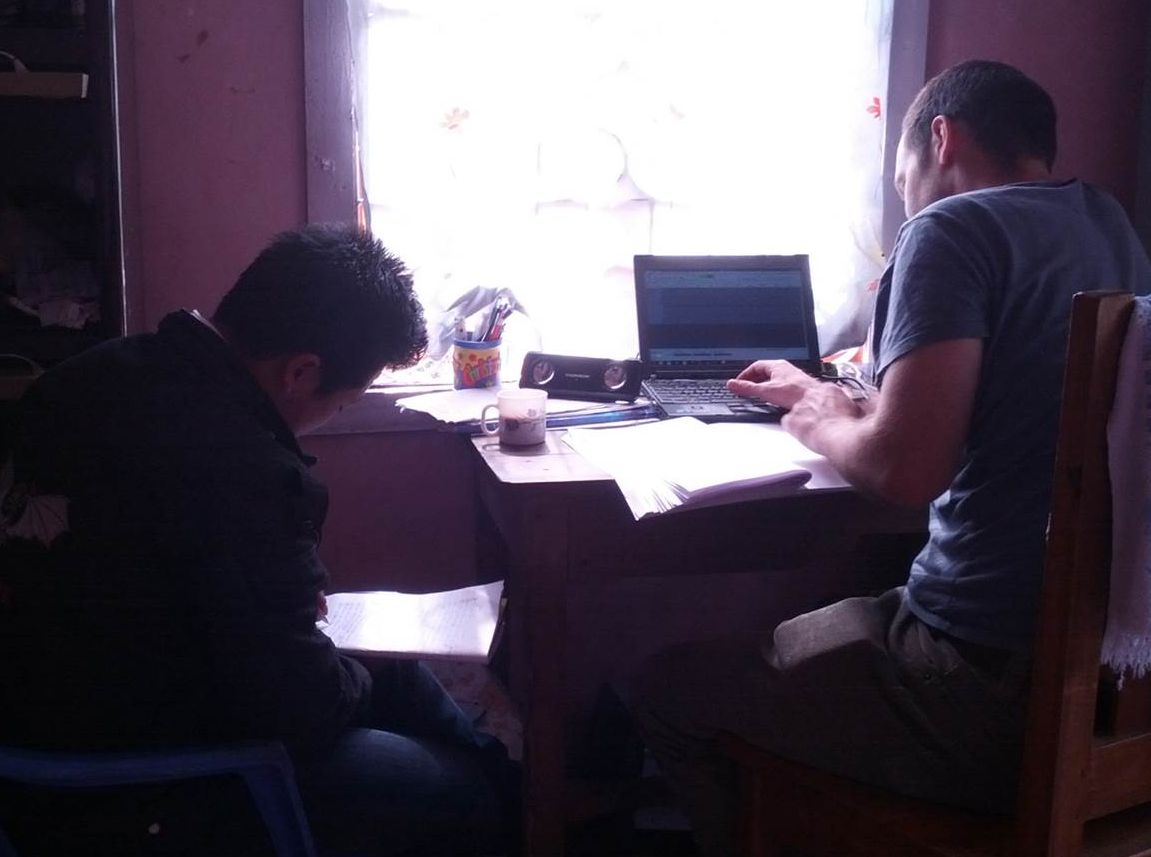
This project aimed to publish a dictionary for the Tangam community, who live in the Kuging Village (Arunachal Pradesh, India). Initially, the proposed project involved the publication of a trilingual Tangam-Minyong-English dictionary, but in the course of the project, it was decided to broaden the scope of the work. The final version of the community dictionary therefore also contains a grammatical sketch and a small collection of analyzed texts. This was done at the request of the co-author and Tangam community member Dugbang Liipir, with the intention to show people how the Tangam language can be analyzed and described, just like other languages of the area.
The grant provided by FEL was able to cover the entire cost of printing 200 copies. One potential outcome of the project is that the Tangam people will have a tangible source of pride in their language, and will be able to support their view (often doubted by outsiders) that their language is real, unique it its own way, and merits being taken seriously. At present, the sole beneficiaries are the Tangam people themselves. However, an "international version" containing an enlarged sketch grammar written in IPA will eventually also be published for the benefit of international scholars.
Title: Description of Darma and the neighboring Rung languages
Country: India
Language(s): Darma/Bangba/Byangkho
Grantee: Christina Willis Oko
Year: 2009
Project summary
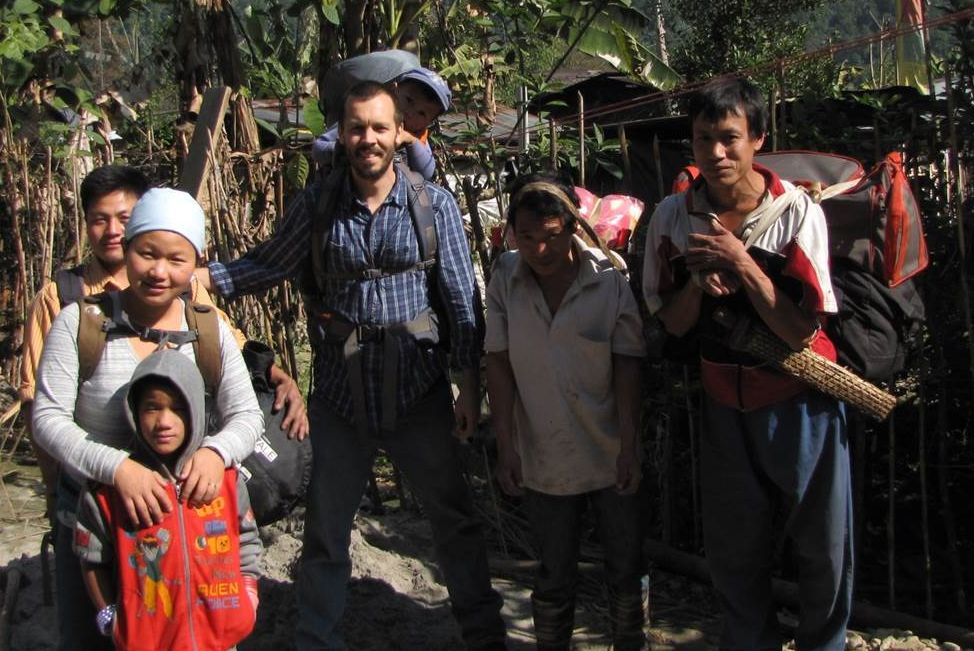
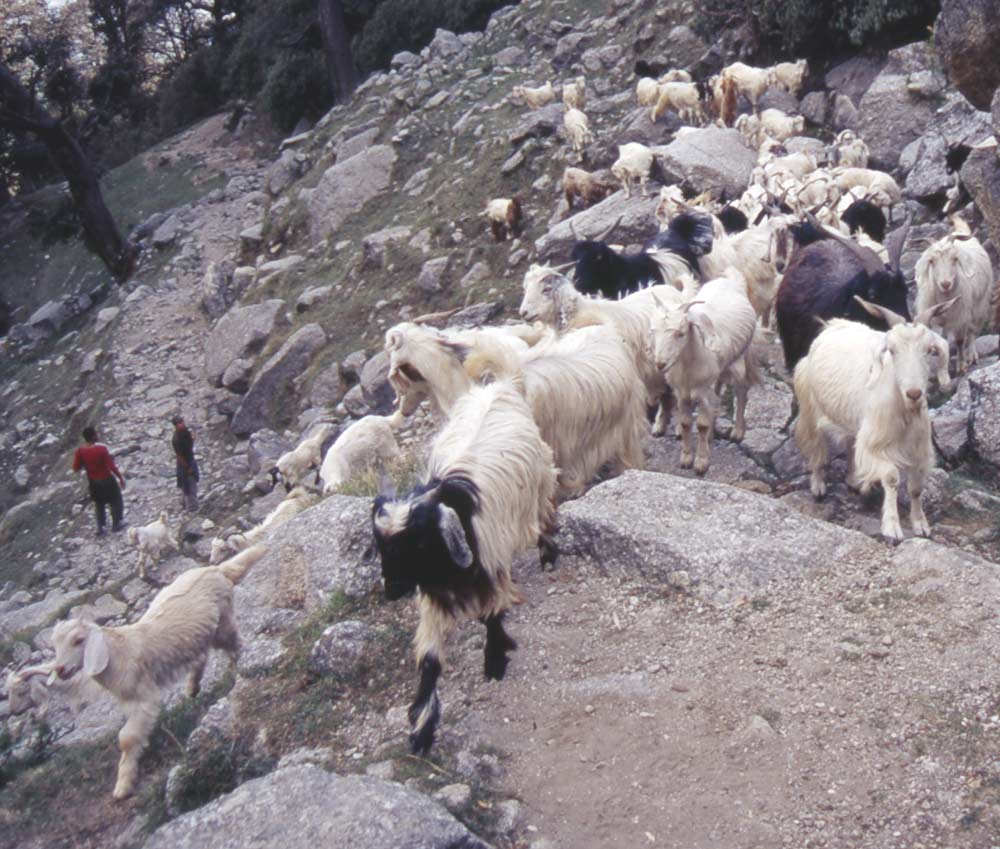
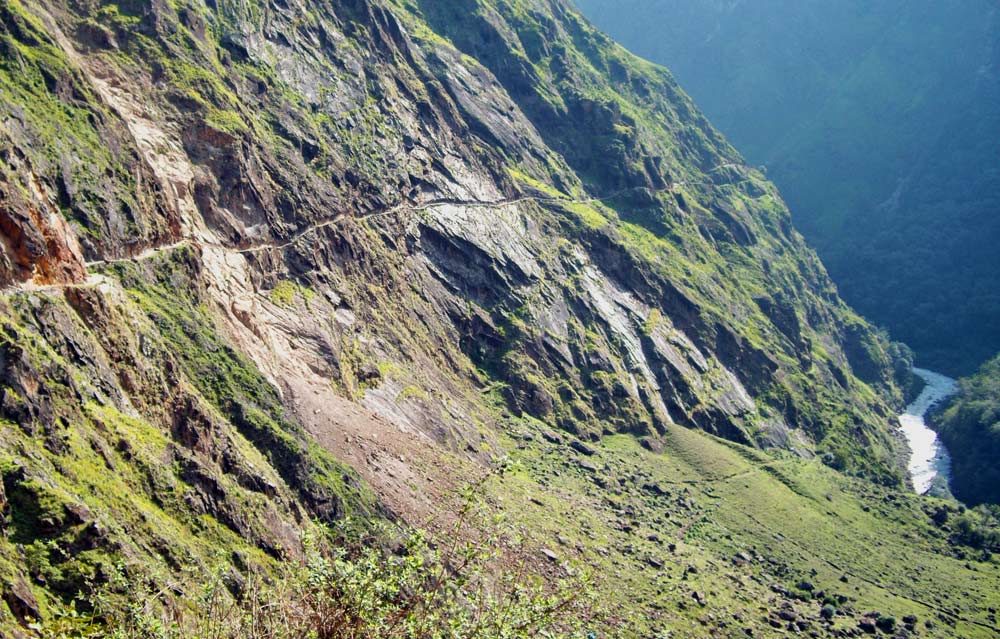
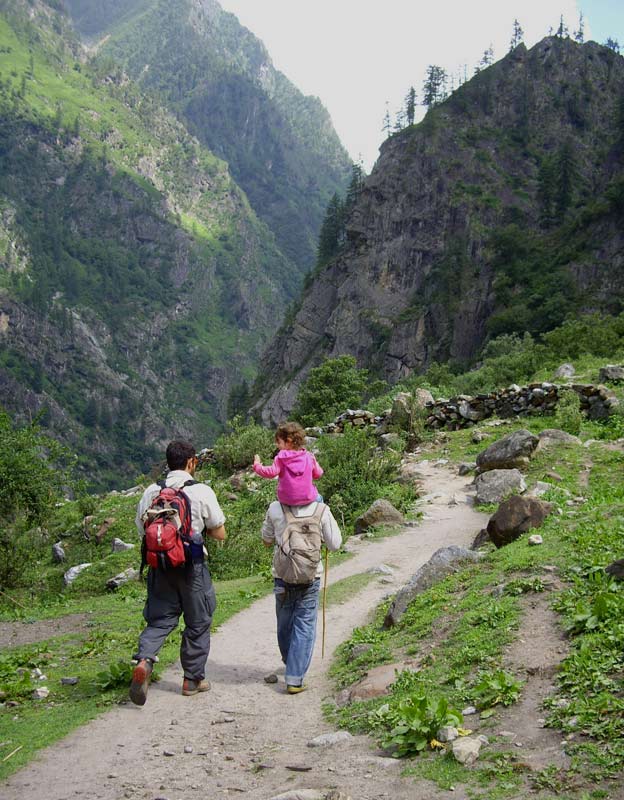
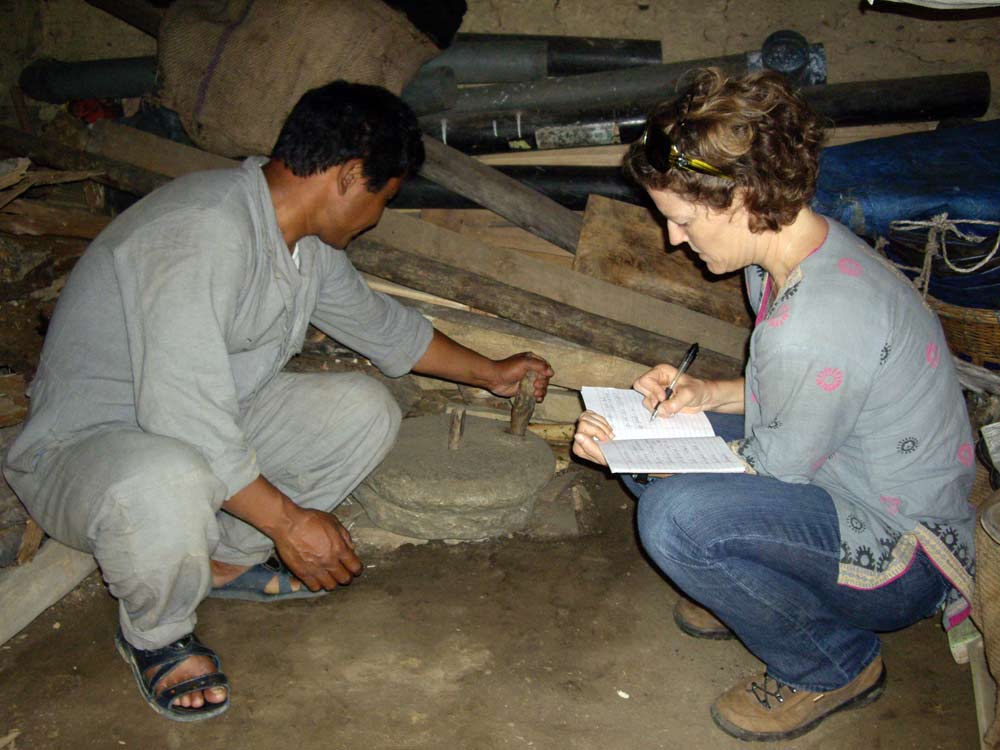
The project supported a 2010 research trip to Uttarakhand, India to continue and expand upon my documentation and description of the languages of the Rung people. Comprising three individual groups - the Darma, Bangba (Chaudangsi) and Byangkho (Byangsi) - the Rung live in the Dharchula sub-district bordering Nepal and Tibet. Like many other Tibeto-Burman languages, they are spoken, not written, and are losing ground to Hindi and English, which are associated with economic security and employment opportunities.
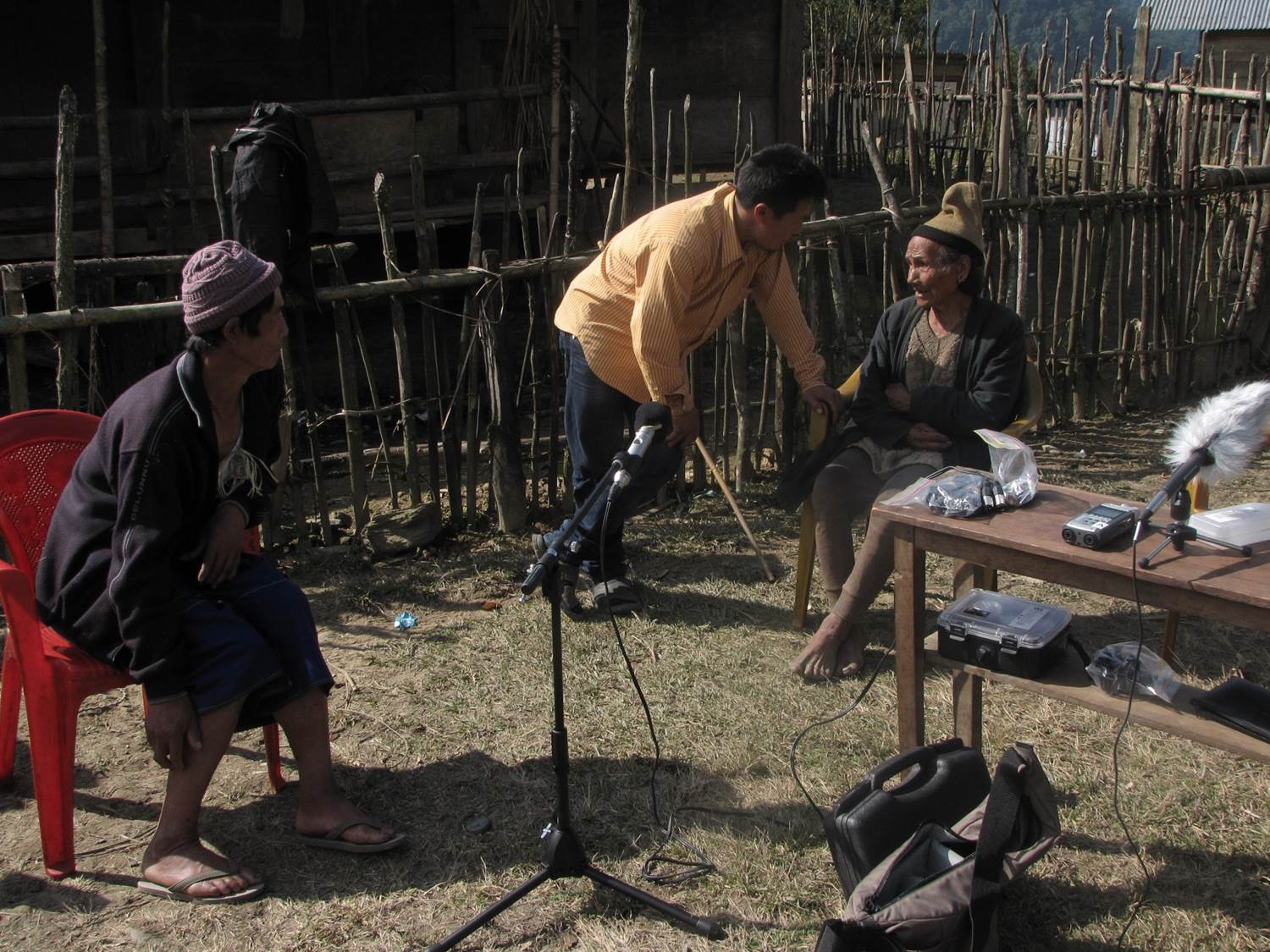
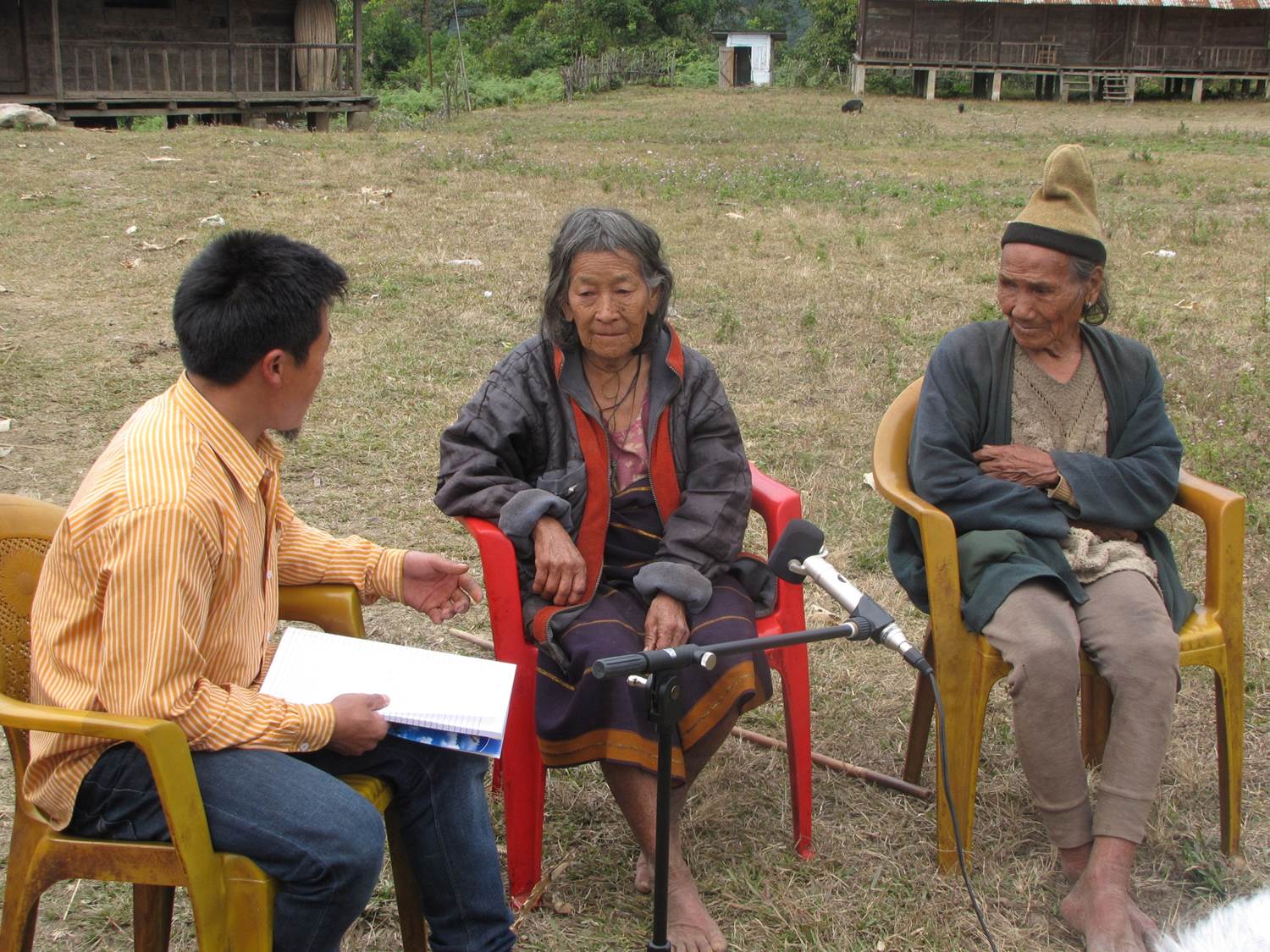
I spent a month in the Indian Himalayas making digital audio recordings of Darma and Bangba people. I had two goals: (1) to clarify questions about the grammar of Darma; and (2) to begin a documentation project on Bangba. Outcomes included conference presentations in the US and UK on the Rung people and their languages. I incorporated the Darma data into a revised version of my dissertation A Grammar of Darma for publication. In addition to recordings of natural discourse (historical narratives, folktales, songs), I recorded word lists to compare core vocabulary in Bangba with Darma and Byangkho.
This research has also had a positive impact on the Rung community who are impressed that an outside scholar has taken an interest their traditional ways of speaking and cultural practices.
Title: Lazca Ders Kitabı - I
Country: Turkey
Language(s): Laz
Grantee: Ismail Avcı Bucaklishi
Year: 2013
Project summary
The original objective of the project was to prepare a study book to assist learning the Laz language at beginner’s level. Whilst giving lectures on the Laz language at the Bogaziçi University, I had prepared notes to teach Laz. Which were used as the basis of the study book. During the project, many native speakers of Laz were consulted, and I received feedback on the first draft from the Laz Institute and the students to whom I taught Laz at the Bogaziçi University. Additionally, I have exchanged ideas with the teachers who teach Laz both in Istanbul and in the North Black Sea area (where the Laz heavily reside). One of the aims was that the book could be used by not only university students but also by everybody who desired to learn Laz. Therefore, I have included dialogues in Laz in many parts of the book, and supported the written material with clip art. This book will help people from all age groups to learn Laz, and set a good example for the future studies on Laz.
Title: The documentation of Brazilian Tuyuka
Country: Brazil
Language(s): Tuyuka
Grantee: Nathalie Pires Vlcekova
Year: 2013
Project summary
The project had three outcomes:
- to aid the Tuyuka school communities in their efforts toward revitalization and valorisation of the language
- the creation of a tangible archive of media products accompanied by linguistic annotation, metadata and some analysis
- the interlinear analysis of part of the recorded and elicited data.
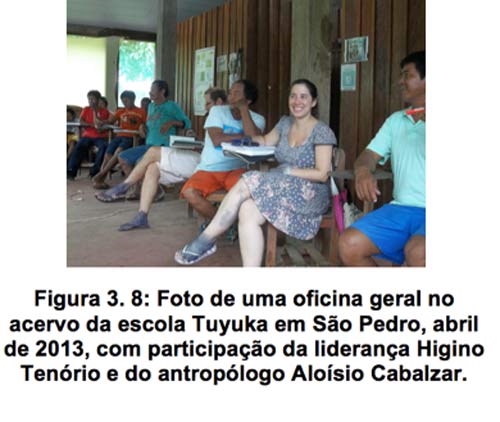
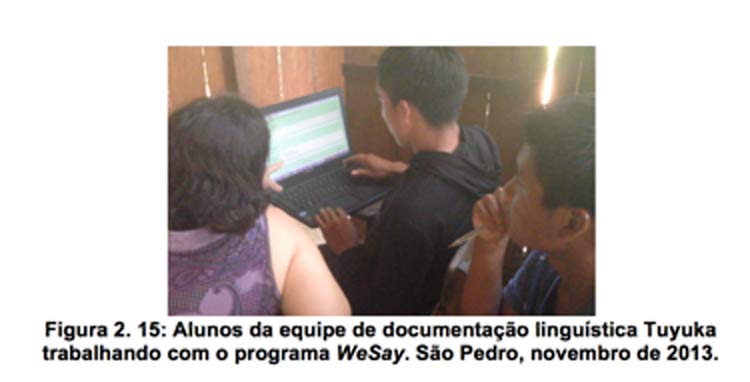
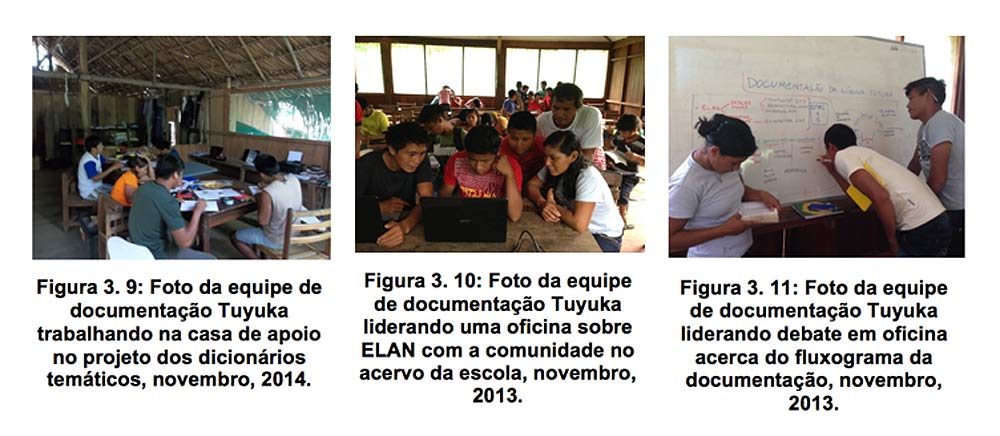
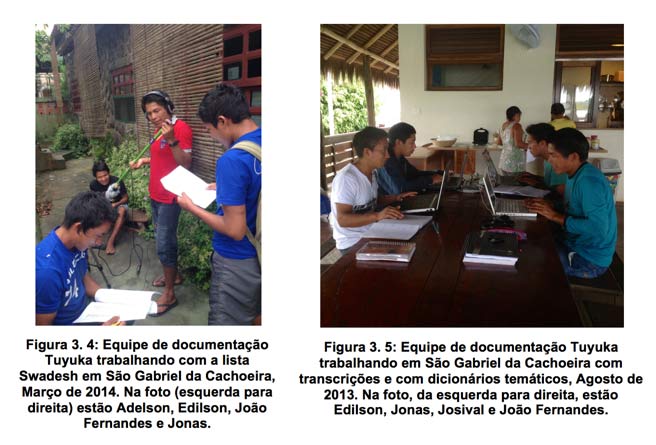
Most of the material was produced in the field through activities and workshops with the goal of involving community members as much as possible. All the project’s major objectives have been achieved to date.
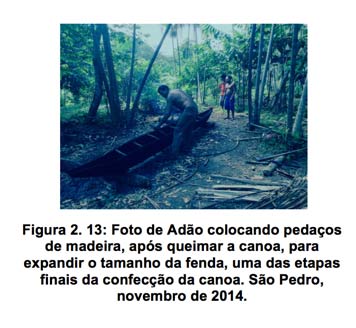
I made five fieldtrips: two to the city of São Gabriel da Cachoeira and three to the community of São Pedro. We have achieved a rich description of linguistic facts about Tuyuka, such as its phonological system and a re-interpretation of the notion of time in the morphological markers of evidentiality. These are based on a combination of elicitations, provoked situations, and real life situations that were recorded and analysed.
We segmented all the video and then used HandBrake to convert the files. In ELAN we use audio extracted using Avidemux. Transcription and translation are made in ELAN and exported to FLEx for interlinear analysis. The dictionary was created in FLEx after having experienced some difficulties trying to migrate it to Lexique Pro including all the media.
Title: Development of mother tongue literacy for the Sumi language community in Nagaland
Country: India
Language(s): Sumi
Grantee: Amos Teo
Year: 2013
Project summary
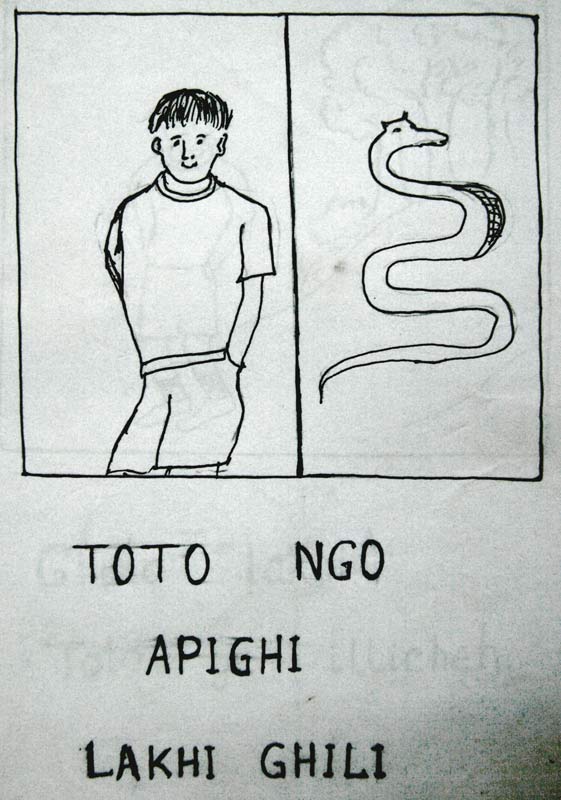
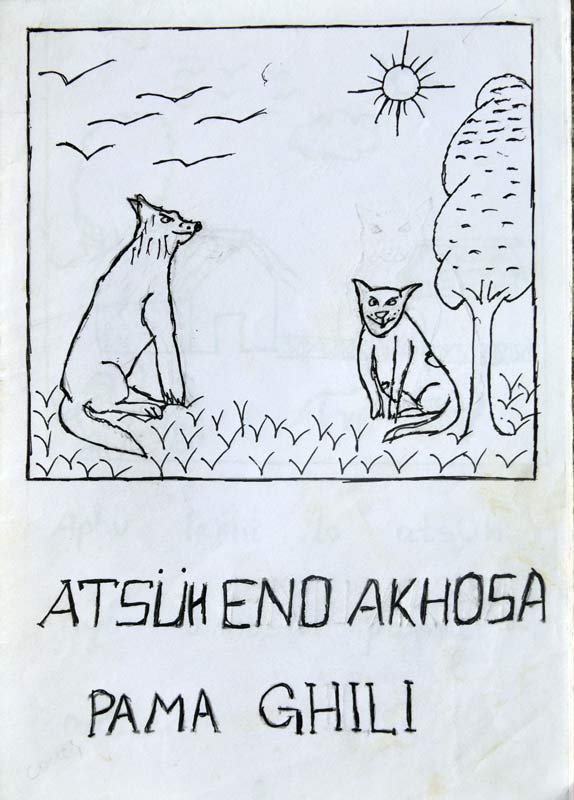
This project aimed to help the Sumi community maintain their mother tongue by producing children’s reading materials in the Sumi language, to encourage reading in the community, beginning with its youngest members. We also want to create awareness among community members regarding how developing literacy in one’s mother tongue can benefit literacy development in another language.
We produced illustrated versions of 4 short children’s stories. Each storybook was written and storyboarded by Sumi community members who attended a 4-day mother tongue literacy development workshop held in Zunheboto town in October 2012. This workshop was hosted by the Sumi Literature Board and tsah Academy, and jointly run with the Northeast Literacy Network. The books were written in Sumi, with translations in English, the language of instruction in schools. The books were then illustrated by a student in the School of Art, Design and Media at Nanyang Technological University, Singapore, working under the supervision of Joan Kelly. Miss Kelly has been working with other students and other linguists to produce the first illustrated children’s books in minority languages of India, Nepal and Indonesia. The books are currently being typeset and will be printed in Assam and distributed in Nagaland.
Title: Early Childhood Language Immersion Project
Country: Vanuatu
Language(s): Nese
Grantee: Lana Takau
Year: 2014
Project summary
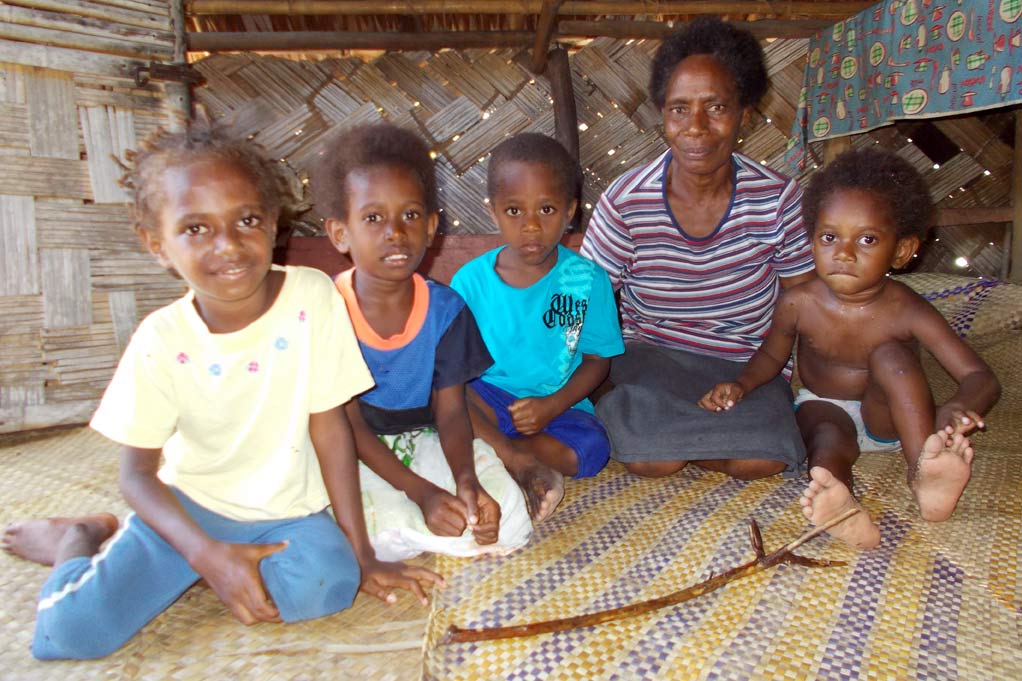
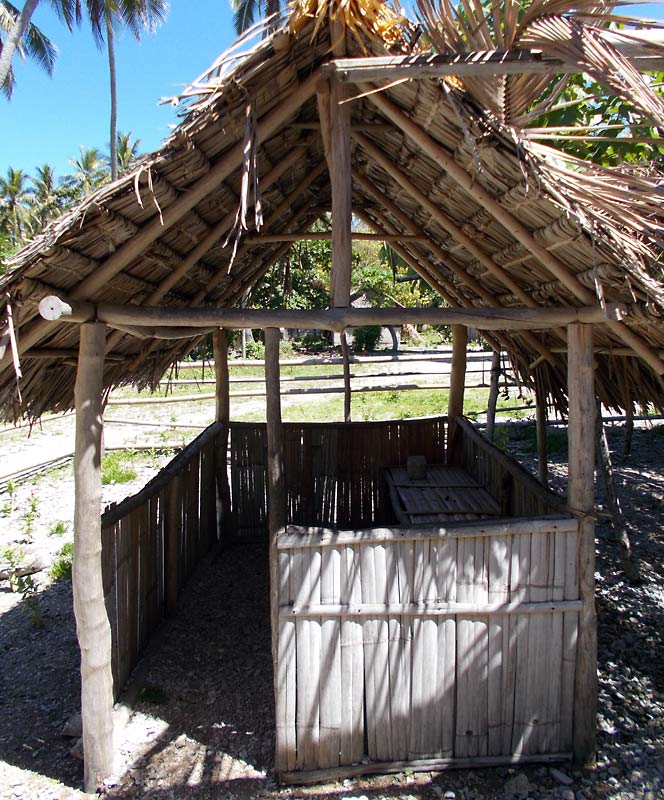
The goal of this project is to initiate revival of the Nese language which is spoken by less than 20 people in North West Malekula in Central Vanuatu. Nese is moribund and is no longer actively spoken on a daily basis in the Matanvat village. The work involved teachers teaching the Nese language to 21 children aged between 3 and 5 years in Matanvat village. As part of an immersion program, the teacher/Nese speaker taught the language to children aged between 3 to 5 years for an hour a day using story-telling and a play-based method. She used resources within the local community such as a canoe, and in a traditional drama house where children would learn the language through dramatizing market scenes, buying and selling in a shop etc..
During the year to July 2016, the project enabled children to acquire the language and sparked an interest in revival of the language within the general Matanvat community. Within te first month, children acquired the ability to say simple sentences in Nese. The children continued to use Nese in their homes which sparked parents’ interest in the language. A family of 8, one of whom attends the language immersion program, has started to use the language on a daily basis - they are now considered fluent in the language. Also, older adults are now using the language during community gatherings such as church gatherings.
Title: Documenting Fala - a minority language in Spanish Extremadura
Country: Spain
Language(s): Fala
Grantee: Vera Ferreira
Year: 2015
Project summary
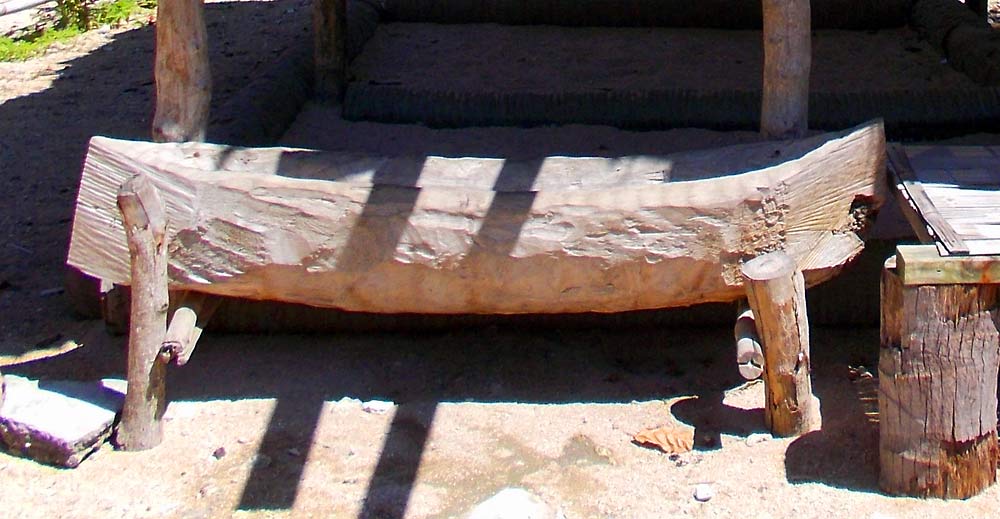
This project aimed at documenting Fala, a small language spoken in Valverde del Fresno, Eljas and San Martín de Trevejo, three small villages in the northwestern part of Extremadura (Spain). In each village the language has its own name, namely Valverdeiru, Lagarteiru and Mañegu respectively. The differences in naming reflect not only the group identity of its speakers but also the differences that exist between the variety of Fala spoken in each village. Thus, Fala is a general and unifying name for the three varieties that belong to the same language. Fala is spoken by approximately 4500 speakers of all ages.
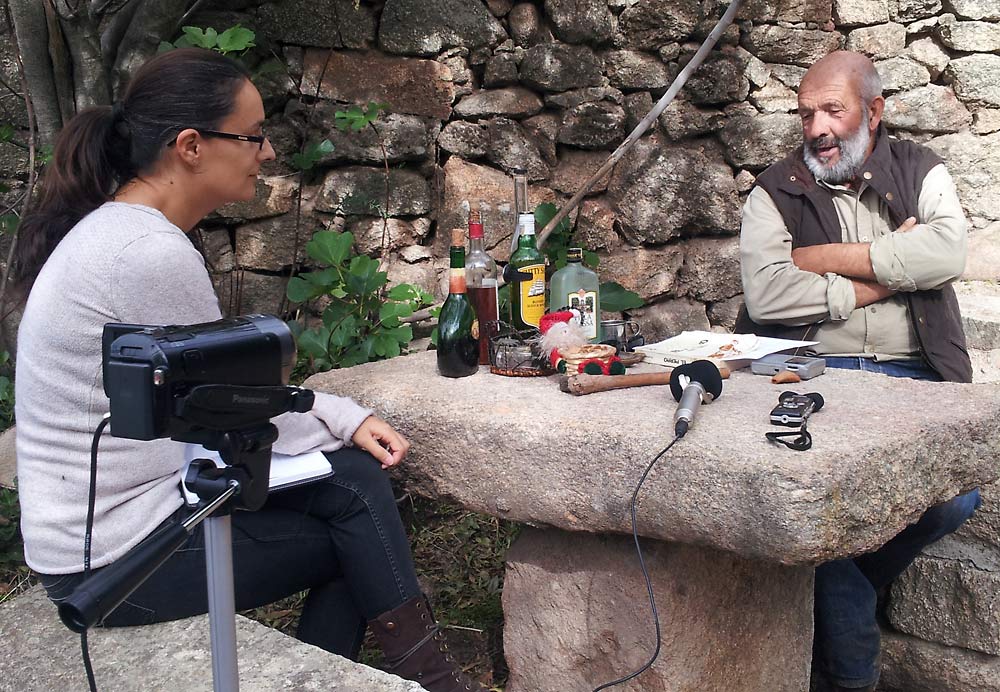
Data collected in October 2015 comprises more than 600 photos and a total of 26 hours of audio (14 hours) and video (12 hours) recordings of local practices, with focus on endangered traditional work methods (agriculture, animal husbandry and household) and everyday language, and with special attention to generational differences and life experiences in a border region (Portugal-Spain). The recordings comprise mainly staged and observed communicative events.
Most of the recordings are still being transcribed and translated into Spanish (and some into Portuguese) by community members. Preliminary wordlists covering the domains of agriculture, fauna and flora, animal husbandry and household were extracted from the primary data collected during fieldwork and are being used as the base for community-driven small multimedia dictionaries with the support of Ferreira and for the creation of a WordByWord version for Fala. The collected data, with the corresponding metadata, is now being archived with ELAR (Endangered Languages Archive).
Links with video examples recorded in each village:
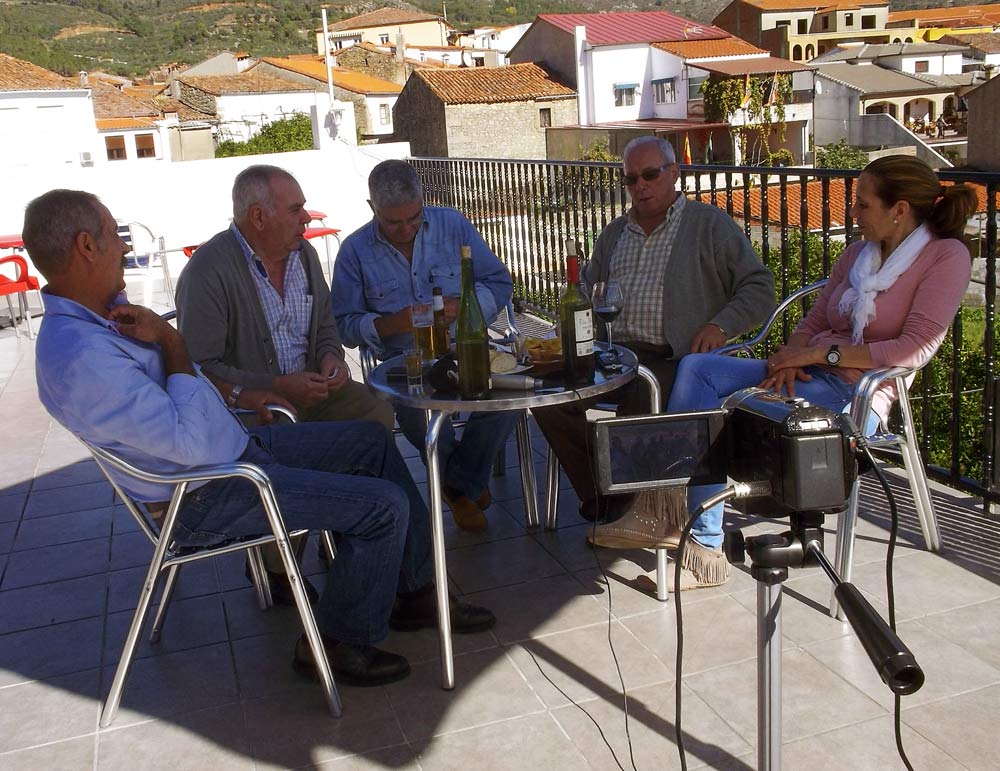
- Marisol Cana and Jose Marquez talking in Mañegu about traditional community activities in San Martín de Trevejo
- Miguel Ramos interviews his grandmother (Patricia Flores Moreno) in Eljas. She is describing in Lagarteiru some of the agricultural tasks she has done during her youth
- Santiago Guerrero, Emilio Donoso, Bernardo Piriz, Luis Sanchez and Purificación Carrasco from Valverde del Fresno talk in Valverdeiru about hunting and life experiences in border region
Title: Wauja Wiktionary and Language Sustainability Project
Country: Brazil
Language(s): Wauja
Grantee: Emilienne M. Ireland
Year: 2015
Project summary
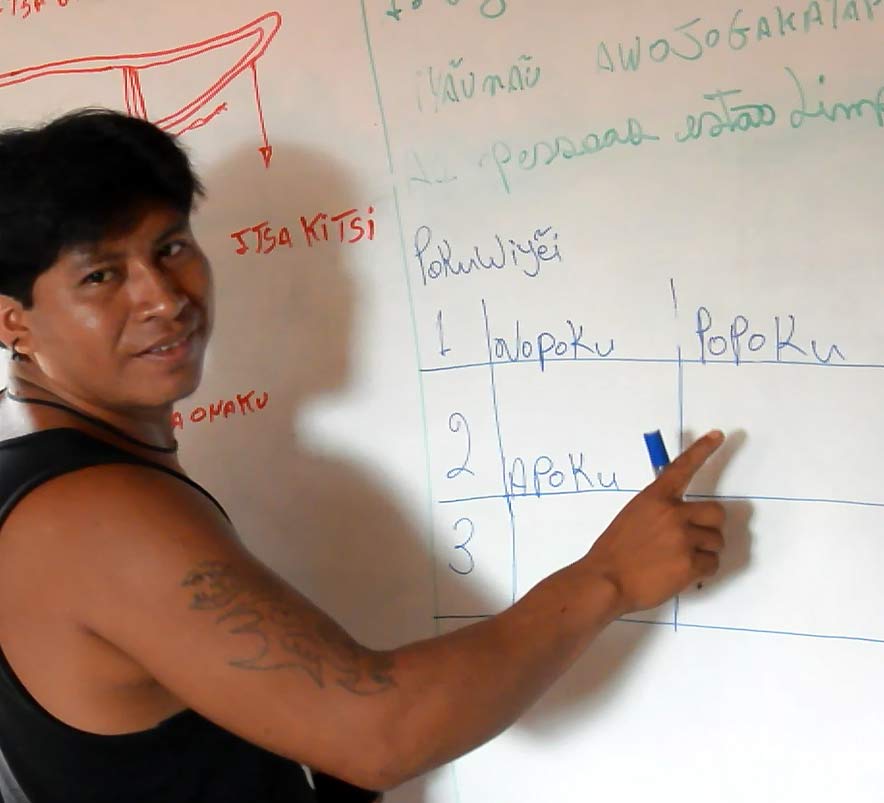
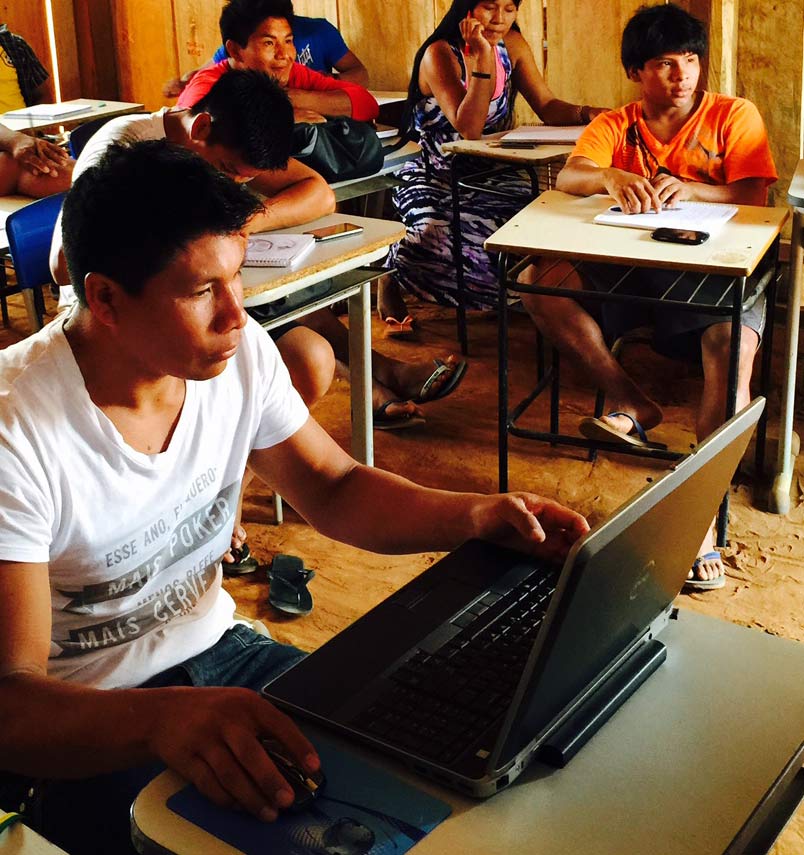
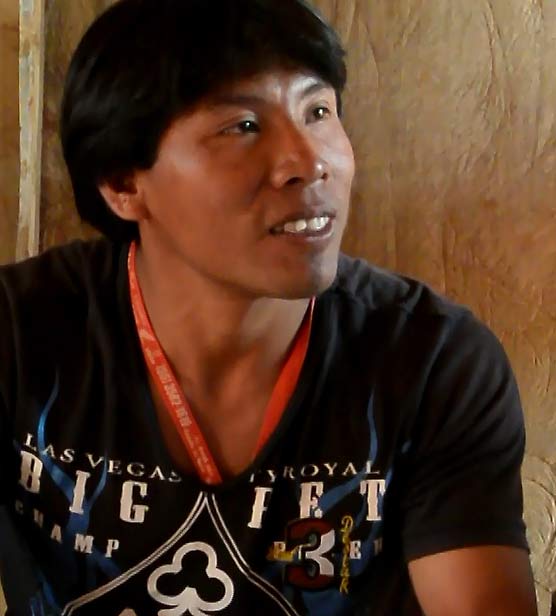
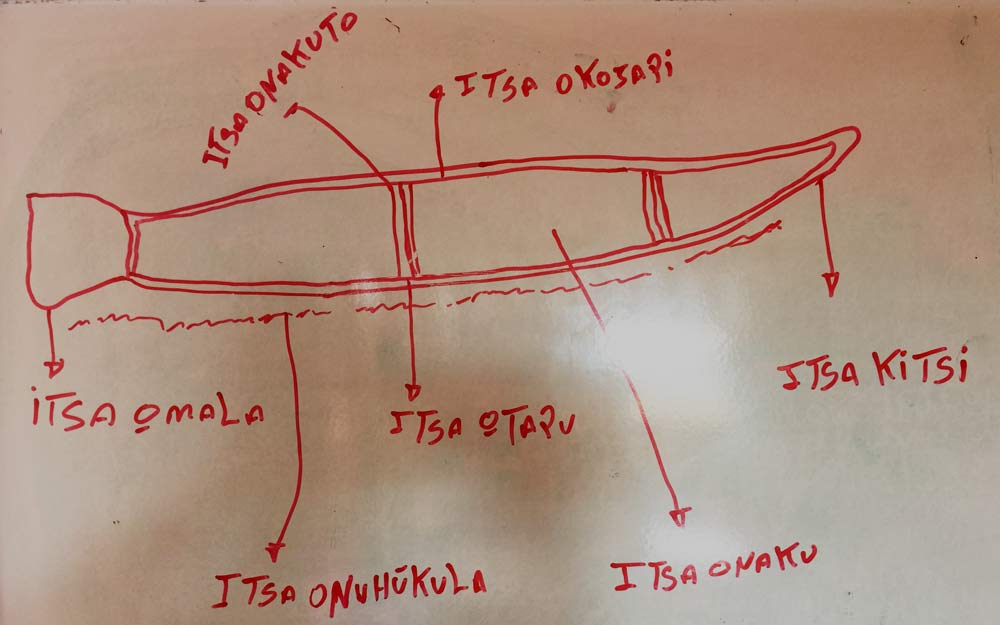
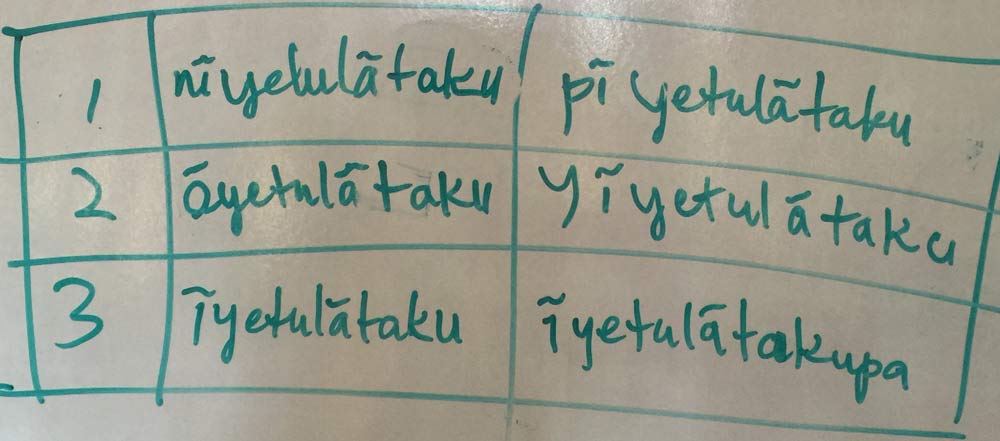
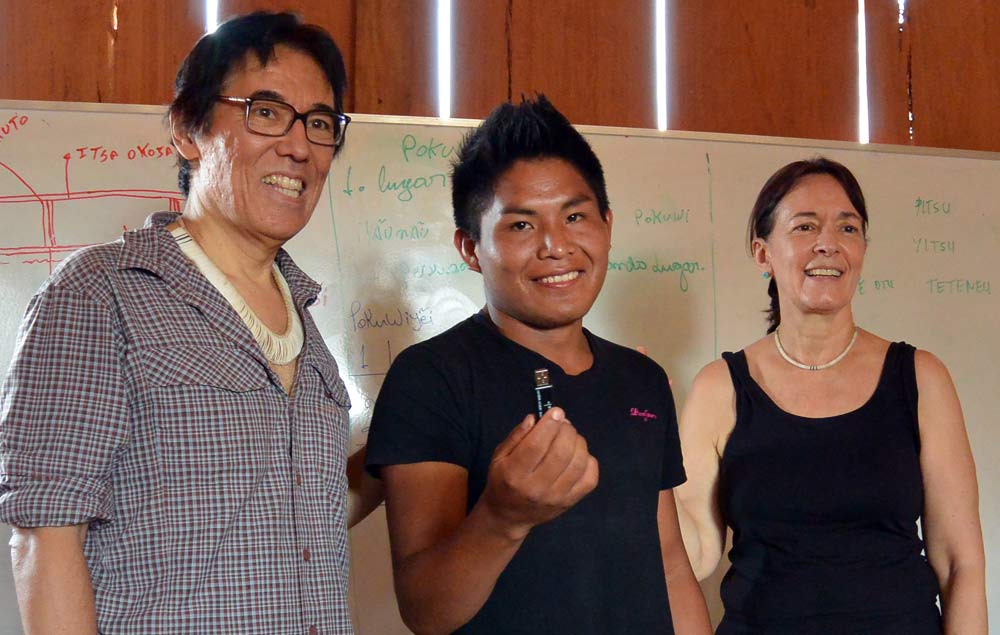
This project aims to engage several Wauja communities in documenting their own language, by training them to use the online Wiktionary platform to build a Wauja-Portuguese dictionary, for use in their schools and the community at large. The Wauja, indigenous Arawak-speakers living in the Amazon rainforest of Central Brazil, spoke almost no Portuguese a generation ago. All children learned Wauja from their elders at home. Today, children attend village schools and are taught a bilingual curriculum. Unfortunately, there is no high school in any of the Wauja villages, and so intellectually curious students must live far from home for several years in border towns, starting as young as age 14, to attend schools in which the only language spoken and taught is Portuguese. This Wiktionary project provides a way for the next generation of Wauja speakers to remain actively engaged in learning their language and culture throughout their formative years, whether they are attending Brazilian high schools away from home, or remaining in the village after finishing their middle school training.
In the initial phase of the project, training workshops in the main village taught Wauja teachers and students the basics of creating lexical entries, and how to publish entries digitally directly from their laptops or smartphones. This was followed by one-on-one training and collaboration via Skype, now with several one-hour sessions per week as more participants join. The project now includes Wauja students living away from their indigenous communities while they attend Portuguese-only high school.
Often, during training sessions, we encounter questions about the language that require an elder's knowledge to resolve. The question is held until the next training session, giving the young person opportunity to contact a parent or other elder via internet, or in the case of more remote villages, by radio, to request help with the language question.
By participating in this Wiktionary project, these young high-schoolers struggling to adapt to a totally non-indigenous school environment have a means of not only staying in touch with their native language, but studying it at an advanced level, all while they contribute to a project in which the community takes pride. The main outcomes of the project so far can be summarized as follows:
- initial work on the first Wauja-Portuguese dictionary is now online, available for the schools and the community to use, and new entries are being added regularly
- a year after the initial workshop for several dozen teachers and students, a slowly growing group of about a dozen Wauja lexicographers are engaged in ongoing one-on-one training and collaboration via Skype
- the project provides a precious connection to their language for young Wauja who must live away from their language community to continue their education
- the Wauja are thinking about consequences of specific orthographies. After seeing how orthographic choices might be visually distinctive but incompatible with a standard keyboard, they are starting to realize that an effective orthography is necessary to support the continuity of their language in the digital era
- working on the dictionary has made Wauja realize their language is rich and complex in ways that they had not appreciated before. They are also proud of their online dictionary (the only one in their culture area). Pride in one’s language is essential for language continuity in a context in which economic incentives for using the language are absent
- some participants are already asking when we will start work on a Wauja-Wauja Wiktionary site with the interface, grammatical terms, and everything else entirely in Wauja. I answer that when we can fully conjugate the verbs, and the elders agree that we are doing it correctly, and when they are handling most of the training, we will be ready to start that project
One of my most committed young collaborators asked me, “When will we finish the Wauja-Portuguese dictionary?” I answered, “When will you be finished tending your father’s grove of pequi trees?” He laughed and said with a grin, “Never!”
Title: Huasteca Potosina Nahuatl: A book-compilation of local stories and legends
Country: Mexico
Language(s): Huasteca Potosina Nahuatl
Grantee: Elwira Sobkowiak
Year: 2015
Project summary
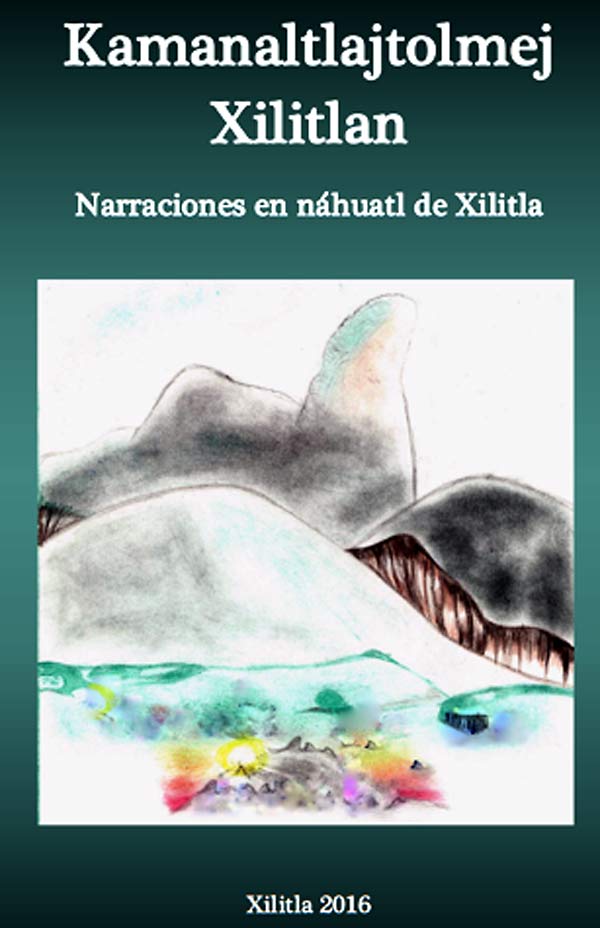
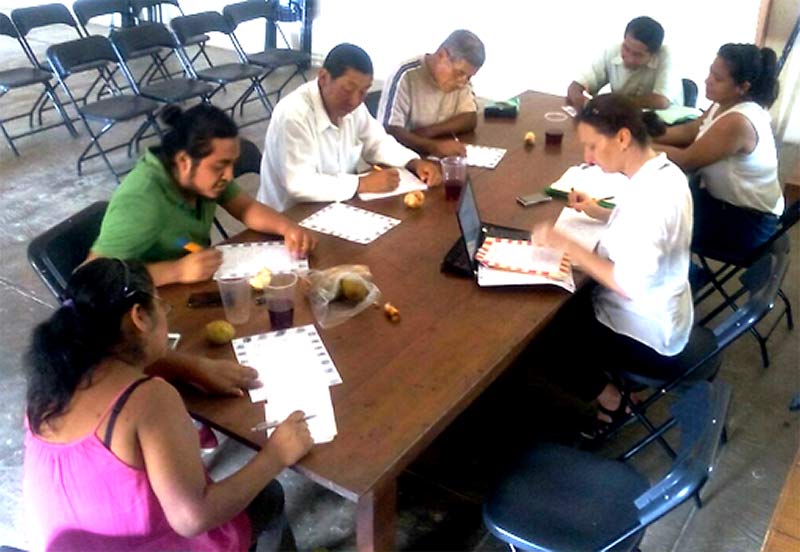
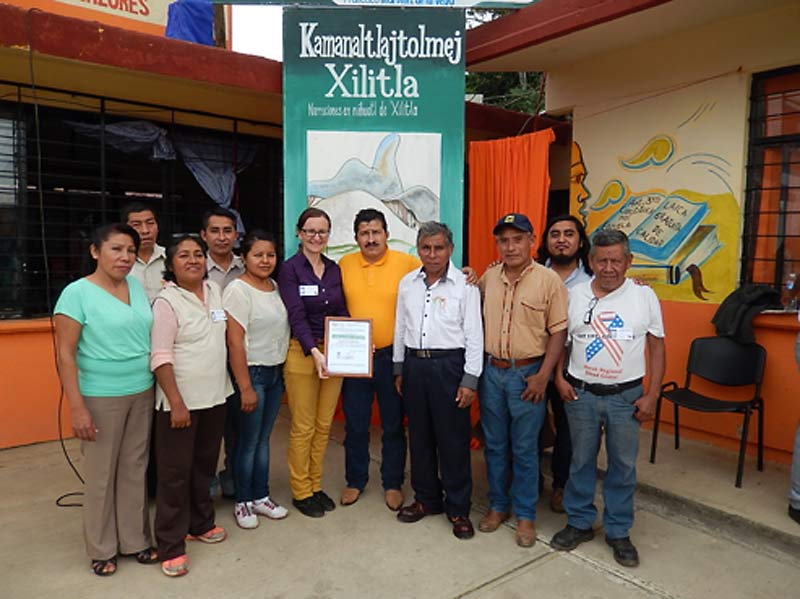
The goal of our project was to document oral tradition of the Nahua people from the region of Huasteca Potosina in Mexico, and from the municipality of Xilitla in particular. We did it in a form of a book-compilation of stories in the local variant of Huasteca Nahuatl (with translation to Spanish). The book, titled Kamanaltlajtolmej Xilitlan: Narraciones en náhuatl de Xilitla, was prepared by a group of dedicated native speakers of Nahuatl from various villages and myself as an editor-in-chief.
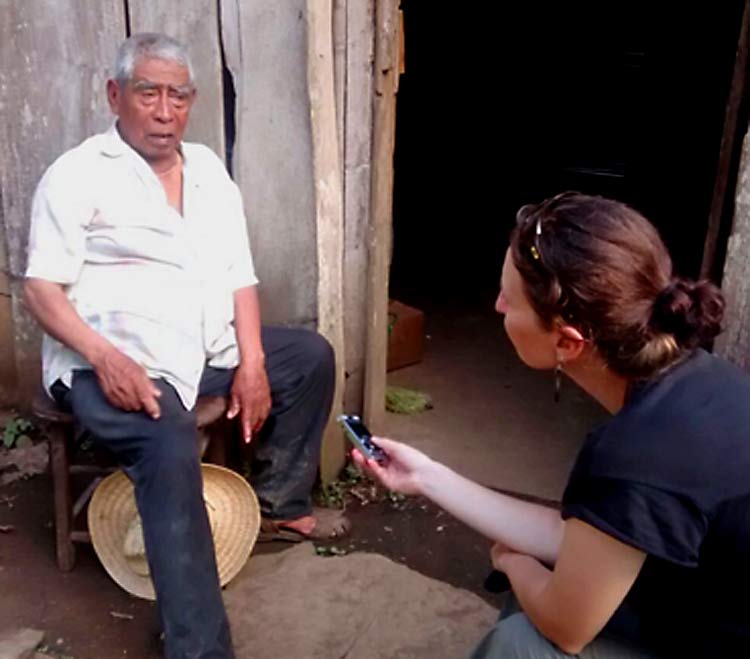
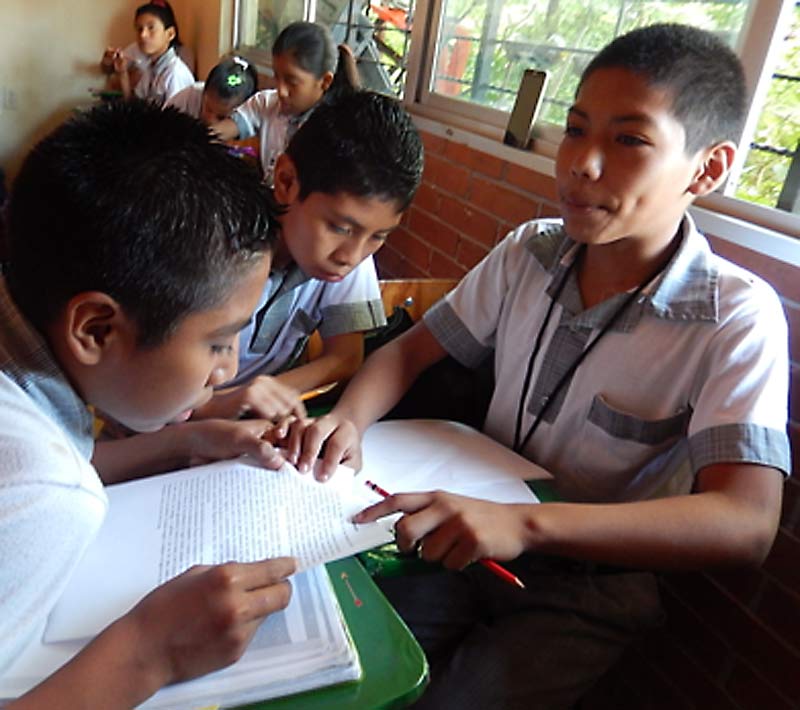
We recorded dozens of stories in Nahuatl about the nature, landscape and culture of the indigenous communities, from which 25 were chosen for publication. These represent the local variant of Nahuatl spoken in the villages Pilateno, San Pedro Huitzquilico, Uxtuapan, Itztacapa, Peña Blanca, El Naranjal, Cuartillo Nuevo, El Jobo, Agua Puerca, and La Herradura. Some of the stories were collected at local secondary schools where students were encouraged to speak to their parents and grandparents and write stories, legends and anecdotes in Nahuatl. The narratives are accompanied by drawings made by students at local schools, a local artist from Xilitla, and photographs.
1000 printed copies of the book are now being distributed in the Nahua villages in Huasteca Potosina, including schools, libraries, cultural centres, indigenous families and others interested in the Nahua oral tradition of the region. The book is also available online at https://torlino.wixsite.com/xilitlanahuatl.
The book was an integral part of the Huasteca Potosina Nahuatl documentation and revitalization project. We hope that the publication will also support efforts to revitalize Nahuatl among young people. As the stories are accompanied by Spanish translation, they can also be used as an aid in learning Nahuatl grammar and enriching Nahuatl vocabulary.
Title: Using Media to Document Waata Language and Cultural Practises
Country: Kenya
Language(s): Waata
Grantee: Larry Ndivo
Year: 2015
Project summary
The project aimed to develop materials for the revitalization and preservation efforts of the Waata language. The language is spoken by nearly 13,000 indigenous people living in territorial groups on the coast of Kenya. Although it is actively used in everyday conversations, there are concerns by community members that it is not being transmitted to the younger members who are increasingly turning to the neighbouring Pokomo and Kamba. Also, the movement and dispersed settlement of the Waata community has led to a gradual diminishing of the indigenous speakers of the language.
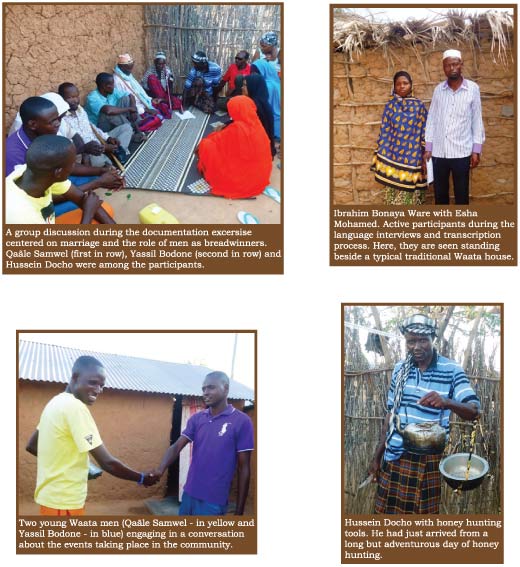
The research process involved five elders of the Waata community who worked as language consultants and four younger members aged between 18-35 who assisted the researcher in making transcriptions and translations. A couple of interviews especially of the Waata King and some elders were conducted to establish the origins, cultural, social, political and economic activities of the Waata. Part of these interviews and a video of some dances constitute the documentation material for the project. In addition, the project resulted in an audio record and a published word list of more than 1000 items with examples of phrases and simple Waata sentences. This publication is designed to provide phonological, semantic and syntactic information on everyday usage of Waata language. The project also produced a sample oral narrative both in the Waata language and an English translated version. A short documentary of the sessions between the researcher and the Waata community members is available.
See online:
 FEL on Facebook