
FEL Grants: Supported projects
FEL regularly provides small grants to fund projects that revitalize and support the use of endangered languages. On this page you can see reports from a selection of the projects that we have supported. By joining FEL, you can support activities such as these.
Select a grantee, language, region, or year:
Grantee:
Language:
Region:
Year:
Grant projects conducted in region: Oceania
Title: Documenting Possession in Miriwoong and Providing Training for Transcription
Country: Australia
Language(s): Miriwoong
Grantee: Christina Murmann
Year: 2014
Project summary
The goal of the Miriwoong project is to create audio and video recordings serving as resources for the in-depth description of possession in Miriwoong, thereby contributing to a more extensive description of this highly endangered language. The elicitation materials were developed in such a way that they elicit possessive structures in an almost natural environment but can also be used as language learning resources. They comprise visual stimuli that were used for story-telling, role-play and language games. The aim of the games was to match or collect pairs of pictures using verbal interaction resulting in such sentences as I have one big yellow bag, do you have three small yellow bags? or The didgeridoo belongs to the old man or The fish has many scales. To represent all areas of possession the pictures and drawings for the games were chosen so that they included humans, animals and objects. They also represented different numbers, colours and conditions (such as whole or broken axes). To make the stimuli particularly useful and appealing, photos of local people and artefacts were included and feedback from the community on the cultural adequacy of the stimuli was incorporated.
The second goal of the project consisted in providing training to the language workers at the local language and culture centre. During my field stay they took part in extensive transcription training allowing them to be involved in the project and empowering them to transcribe valuable older recordings by themselves.


Title: Production of a dictionary
Country: Papua New Guinea
Language(s): Nungon
Grantee: Hannah S Sarvasy
Year: 2014
Project summary
The Nungon Dictionary Project was conceived of as a project to result in a Nungon-English dictionary, based on Nungon-speaking community input from 2011-2013. The original plan was to print Nungon dictionaries for community members. In a field trip in July/August 2015, however, community members decided that a more pressing concern for them was documentation of Nungon terms for rainforest flora. They identified a pressing need for printed Nungon-language ethnobotanical materials. With their guidance, the Nungon Dictionary Project was then redirected toward ethnobotanical documentation, with a Nungon Botanical Dictionary as principal output. This Dictionary was to be published purely in Nungon, with local families and schools as the primary users.
In August 2013, several Nungon speakers painstakingly collected tokens of over 300 different rainforest plants, pressed them, and collated them in plastic-leafed binders. Most importantly, these speakers entered information on each plant into a digital database, including its Nungon name, relationship to other plants in the Nungon taxonomical system, physical description, fruit, seed and flower description, traditional uses, and animal or human consumers.
In July/August 2015, Nungon speakers pointed out to me that some of the tokens from 2013 had rotted or had been eaten by insects. They proposed that a more permanent record be created in the form of the Botanical Dictionary, with photographs of as many of the plants as possible next to their descriptions. All text in the Dictionary would be in the Nungon language to ensure community control over information on medicinal uses of certain plants, for instance. One Nungon speaker took over 750 photographs of over 520 plant species, including those of the original collection but also including some that had been overlooked then. Working with that speaker and others, I compiled information on the plants that had not been included in the original database.
I then combined these photographs with all the descriptions in the Nungon Botanical Dictionary, organized according to Nungon taxonomical categories. The resulting dictionary will be printed by the Summer Institute of Linguistics (SIL) Press in full colour by March 2016, to be transported to the Nungon-speaking area by Summer Institute of Linguistics Aviation by June 2016. The books have not yet been printed, since the logistics of delivering them to the community have not yet been planned.


Title: Using language games to document Possession in Miriwoong
Country: Australia
Language(s): Miriwoong
Grantee: Christina Murmann
Year: 2015
Project summary
The aim of the project is to spur the documentation of the highly endangered Miriwoong language, which is spoken fluently by no more than 20 elderly speakers in Western Australia. In particular, the project will describe the linguistic structures involved in expressing possession. During a field trip in 2014, data was gathered with the help of tasks and language games which encouraged speakers to produce sentences containing possessive constructions such as I have a big yellow bag, The didgeridoo belongs to the old man or The fish has many scales. The second fieldtrip in 2015 was dedicated to clarify questions arising during transcription and analysis of this data and carrying out revised versions of the games with additional speakers to test hypotheses and allow for possible variation in the language.
The data was mainly gathered during two fieldtrips since especially senior speakers feel much more confident on their traditional country than in an office environment. Younger speakers benefitted from language session with senior speakers as well as two training workshops on transcription and media equipment. Transcription skills were enhanced and the way was paved for engrossed independence.
Some possessive structures in Miriwoong were potentially influenced by Aboriginal English or Kimberley Kriol, the mother tongue of most younger Miriwoong people. Therefore, during this trip presumably relevant sentence where elicited in Kriol.


Title: Koromu: Development of reading and audio-visual materials
Country: Papua New Guinea
Language(s): Koromu
Grantee: Carol Priestley
Year: 2013
Project summary
The project aimed to encourage greater use of the Koromu language amongst young people and between them and older speakers, participation of adults in production of written and audio-visual materials on topics such as traditional environmental knowledge of plants and use of written and audio-visual materials in the community and schools (especially elementary).
The methods used included collaboration with Koromu speakers to produce audio-visual and reading materials and use of local categories through investigative frameworks drafted with key language consultants (cf. Priestley 2013). Descriptions of photographs taken near Kesawai 1 and enroute to the southern villages and of real plants in situ were recorded with fluent Koromu speakers in writing and/or with the AV recorder (Zoom Q2). Some of the walking and recording was conducted with adults and younger people to enable transgenerational communication. Texts were transcribed with Koromu consultants and later checked and entered into a Saymore database in Australia. Photographs of people involved were included to provide motivational interest. Also basic literacy and writing sessions were conducted, in particular a day-long session a with church women’s group with women from Kesawai 1 and 2. Each participant created a handwritten book to keep. Photographs were taken of drawings, texts and participants. These were later cropped, lightened/darkened and combined with typed texts, with standardised spelling, to contribute to a book.
The outcomes are a book on food and trees (14 copies) and a set of Audio-Visual recordings about plants and their uses based on spoken and written material from many Koromu speakers. Sections of the book and AV materials are arranged from the simplest to the more complex texts to facilitate use by early readers/learners.
Project summary in Tok Pisin
Dispela wok em laik helpim ol yangpela i toktok moa yet long tokples Koromu, na long strongim tokplis long olgeta papa, mama na pikinini. Em laikim helpim ol manmeri long putim ol save bilong ol, long kaikai na diwai bilong bus, long buk na rekoding. Bihain mipela laikim ol i ken ritim long skul na long ples.
Em wok bilo ol lain long ples na bilo mi long wokim buk na rekoding. Na mipela i gat sampela kwesten long helpim dispel wok. Mipela toktok long ol piksa bilong mipela Koromu, na tu mipela raun long bus, ol pikinini wantaim. Mipela kisim piksa na rekoding long stori bilong ol kainkain diwai na kainkain samting, na long husat i mekim dispel wok. Ol lain meri long meri felosip i bung na wokim liklik buk bilong ol wanwan. Sampela meri bilong blok i wok wantaim meri bilong ples. Dispela buk i gat tok long samting bilong gaden na wok bilong dispela. Sampela meri em bilong Kesawai 1, sampela bilong Kesawai 2, na sampela ol meri bilong blok. Meri ol i holim buk bilong ol wanwan na mi bin kisim poto na bihain mi straitim poto na mekim story na putim long buk long lainim ol long rit. Orait nau yumi gat buk na sampela rekoding i stori long diwai na kaikai bilong bus. Ai ting ol i ken lukim sampela. Fes pat em isi liklik na bihain em i kamap hat liklik. Ol yangpela tu i bin mekim dispel wok long larim ol i kisim na holim save long bus.


Title: Andajin
Country: Australia
Language(s): Andajin
Grantee: Thomas Saunders
Year: 2002
Project summary
The goal of the project was to record some of the Andajin language of the Worrorran language family of the Kimberley region of Western Australia from the last 2 speakers with the aim of producing a wordlist. Although Andajin is closely related to Ngarinyin, a more widely spoken language, it has also been influenced by its south-westerly neighbour Bunuba. No one had ever documented Andajin language or knowledge of Andajin country before. Andajin was critically endangered (in 2003) and had not been spoken regularly by people for a long time. The speakers were men in their 80s. One used the related language Ngarinyin more commonly. The other used the language Gija more.
I worked with one speaker at Imintji community in Ngarinyn country in 2003 and in 2004 I travelled with the other speaker and some of his family to Andajin country (about 5 hours from Derby). I recorded Andajin words, including place names and songs
The outcomes of the project were a wordlist, audio recordings of words, place names and sentences, songs and photos of significant places in Andajin country. The last speaker died in 2012, so Andajin is now extinct, although some Ngarinyin speakers remember words and phrases.


Title: Early Childhood Language Immersion Project
Country: Vanuatu
Language(s): Nese
Grantee: Lana Takau
Year: 2014
Project summary
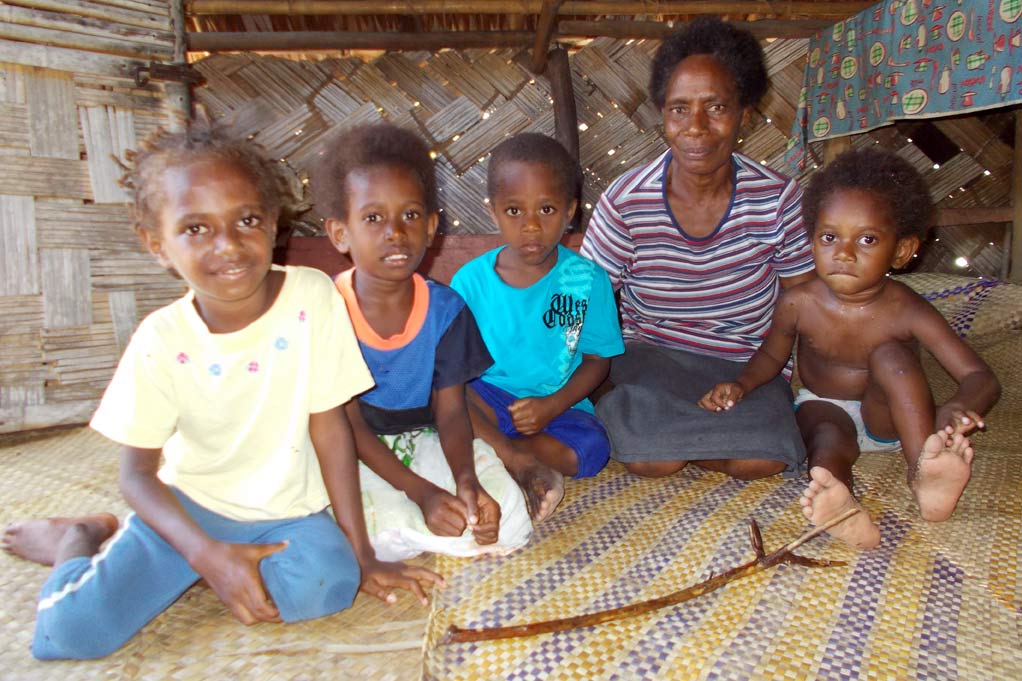
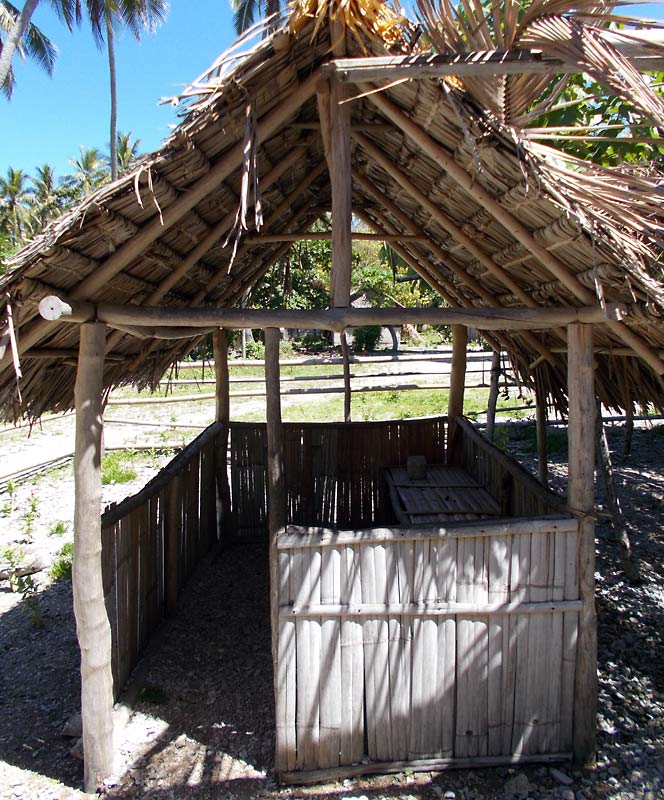
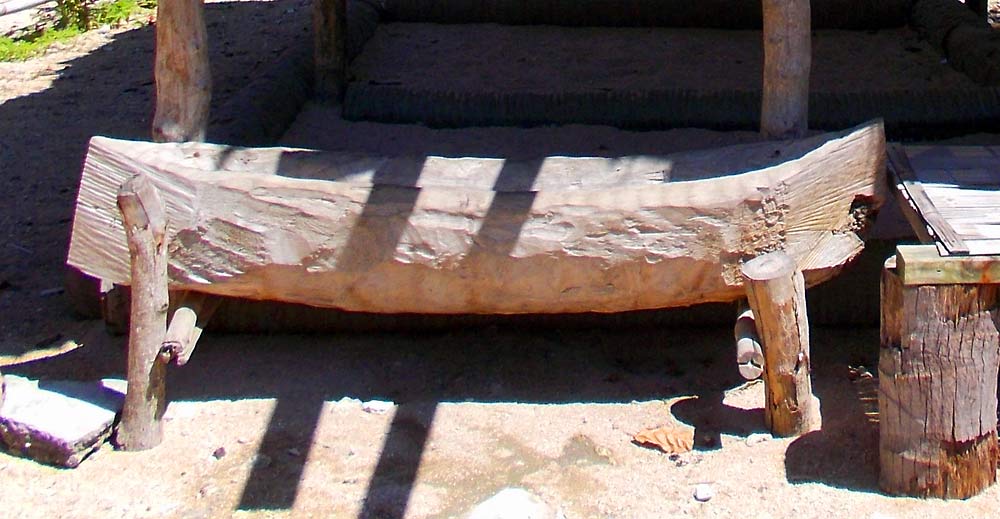
The goal of this project is to initiate revival of the Nese language which is spoken by less than 20 people in North West Malekula in Central Vanuatu. Nese is moribund and is no longer actively spoken on a daily basis in the Matanvat village. The work involved teachers teaching the Nese language to 21 children aged between 3 and 5 years in Matanvat village. As part of an immersion program, the teacher/Nese speaker taught the language to children aged between 3 to 5 years for an hour a day using story-telling and a play-based method. She used resources within the local community such as a canoe, and in a traditional drama house where children would learn the language through dramatizing market scenes, buying and selling in a shop etc..
During the year to July 2016, the project enabled children to acquire the language and sparked an interest in revival of the language within the general Matanvat community. Within te first month, children acquired the ability to say simple sentences in Nese. The children continued to use Nese in their homes which sparked parents’ interest in the language. A family of 8, one of whom attends the language immersion program, has started to use the language on a daily basis - they are now considered fluent in the language. Also, older adults are now using the language during community gatherings such as church gatherings.
 FEL on Facebook