 Foundation for Endangered Languages
Home | Manifesto | Membership details | Proceedings | Grant Applications | Newsletter | Links | Bibliography
|
||
|
2. Development of the Foundation
The Foundation for Endangered Languages is now accepting proposals for projects of work that will support, enable or assist the documentation, protection or promotion of one or more endangered languages. Please pass on this announcement to your friends and colleagues in endangered language communities who may not have access to Ogmios, the Internet or e-mail.
Form for Submissions It may also be obtained from the Editor of Ogmios, at the address on page 2. All proposals must be submitted in this form, to ensure comparability.
Deadline The FEL Committee will announce its decision before the 31st of March 2003. Here are four points to note especially, the first two of them new this year.
1. The form now contains a new question, enquiring on the potential for further work, after completion of a first grant. This material will serve both to support the current application in the selection process, and also to provide the Foundation with arguments in their quest for further funds to supplement existing projects in the future. Minutes of the Annual General Meeting held at the Mangrove Hotel, Broome, Western Australia, on Tuesday 23 September 2003 at 11.30 a.m. Note by the Secretary: The following minutes, taken by the Treasurer, refer to the part of the agenda following the President's and Treasurer's reports (annexed to these minutes) and before and after the (re-)election of office bearers. The minutes have been annotated by the Exec Cttee at its meeting on 2 November, 2003 1. Referring to the President's and Treasurer's reports on the grants awarded in the past year (in the absence of a separate report from the Grants Officer), NORMAN THOMSON proposed that in future the results of research subsidized by the Foundation be presented at subsequent Annual General meetings. The Treasurer noted that this was a good idea, worth acting on, with the provision that actual published results of subsidized researchers' work often takes longer than a year to appear. The Executive Committee discussed the issue and decided the best solution would be to request an annual reports and to make these available at the AGM. 2. NIGEL CRAWHALL asked about the Foundation's relations with the Rausing Foundation and UNESCO. The President replied that he had acted as a consultant to the Rausing Foundation in setting up its operations; he viewed the two foundations as complementary rather than rivals Nigel Crawhall noted that the Norwegian state foreign aid agency NORAD plans to release funds to support indigenous peoples, a fact that our Foundation should take account of. 3. CLAIRE BOWERN suggested that in future the Foundation should consider providing or getting sponsorship for equipment to assist scholars researching endangered languages. The Executive Committee wish to point out that equipment provision can be made as part of an application. Equipment-only applications can also be considered, but they would be judged on their own merits. 4. At this point the election of the Foundation's office bearers was held, the committee resigning en bloc and Michael Walsh temporarily taking the chair and presiding over the re-election of the entire committee. The Membership Secretary had tendered his resignation and his post had been taken temporarily by the President; there were no new nominations for posts on the Executive Committee. 5. The following slate was elected unopposed at the AGM in Broome, WA, on 23 September 2003. Chairman: Nicholas Ostler Treasurer: Christopher Moseley Secretary: Nigel Birch
Executive Committee: 6. There followed, under the heading `Any Other Business', a discussion of two Motions put before the meeting: 7. A motion on the correct orthographic use of toponyms in the Commonwealth was tabled, proposed by [name of proposer not noted]. NIGEL CRAWHALL suggested that the Commonwealth Heads of Government Meeting be pressed on the issue, as well as the government of Canada. The motion had arisen following a presentation by DAVID NASH to the conference on the evolution of agreed toponyms in Australia. 8. The motion was carried nem. con. 9. A motion was tabled opposing the suggested dropping of the language question(s) from future versions of the Australian national census. The motion was proposed by NICHOLAS THIEBERGER, who argued that there was a risk to linguists (and to the nation) of losing valuable statistical data if the questions on language use in Australian households were dropped for economic reasons. A form of words for the proposed resolution was put before the meeting, but following suggestions from the floor for amendments to the wording, it was agreed to work out the final form of words in a separate committee. Provisions in the wording included a suggestion from NIGEL CRAWHALL that the 3 categories of language use given in the Canadian census be given as a good example to follow; from DAVID NASH that it be pointed out that the Australian Bureau of Statistics has improved the language question over the last two decades; and that the collection of accurate language data is invaluable in monitoring the health of Australia's language heritage. Executive Committee noted that comments on the Australian census had been relayed to the appropriate organisations/individuals. 10. HANS BOAS further proposed approaching Australian Members of Parliament to influence the Bureau of Statistics over the issue. 11. Good addresses for recipients of the resolution in its final agreed form arising from this motion were sought. 12. The motion was carried nem con. 13. In further discussion, KAREN ATKINSON proposed encouraging the use of endangered languages as a medium for presenting papers at our conferences. JANE SIMPSON responded that the cost of interpreting the papers into more widely-used languages would considerably raise the registration fees. FRANCES KOFOD asked if, when papers are offered, there are any restrictions on the language to be used for presentation. The President replied that in principle there were none, and that in the past papers had been given in at least French and Spanish. The President added that time was also a constraint 14. Discussion followed on the venue for our 2004 conference. The President noted that Barcelona, Wales and the Sorbian-speaking centre of Cottbus, Germany, had been offered as venues so far. A decision would be reached by the committee in the new year. 15. MARY JANE NORRIS undertook to check the possibility of holding a future conference in Canada. 16. NIGEL CRAWHALL suggested holding a future conference in South Africa with indigenous (San) participation. 17. ALLAN MARETT said that the International Council for Traditional Music is planning a future conference in Canada in a future year and raised the possibility of associating it with an FEL conference. 18. The meeting adjourned at 1 p.m.
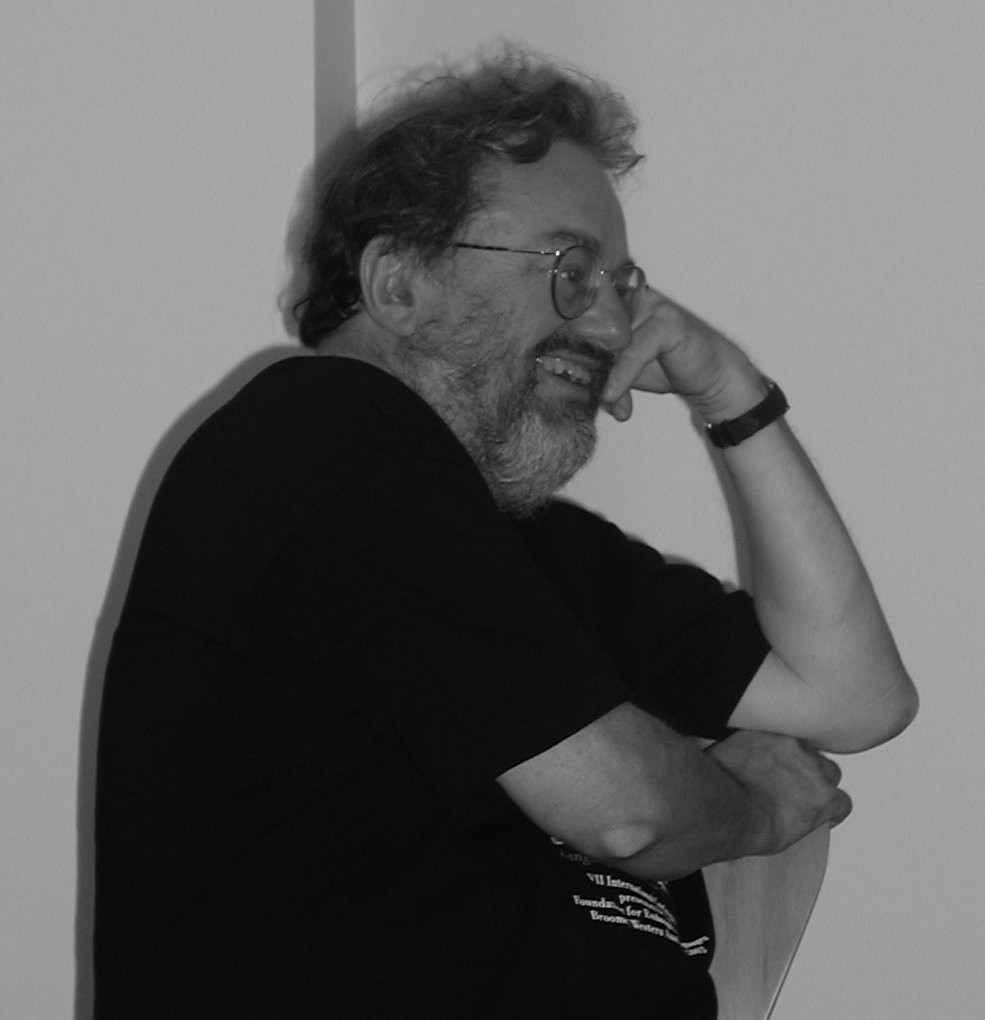
Chris Moseley
Annexe 1
Our Mission
Our Performance |
Some Examples Languages aided by FEL
Persistent Problem
Therefore: The Foundation gets its main income to carry on its activities from membership fees and from donations. We also earn income from the sale of Proceedings of our present and past conferences. As for what we spend our money on, that consists mainly of grants to researchers and field workers, mailing costs to subscribers, and printing costs for `Ogmios’ and the Proceedings volumes. The Foundation is a registered charity and our committee work is entirely voluntary, so there is no expenditure on salary or office overheads. Chris Moseley, FEL Treasurer At the time of this report there is a healthy number of paid-up members of the Foundation, our President and temporary Membership Secretary can tell us the exact figure according to the latest membership list. This indicates slow and steady growth, but we have a fairly high turnover of membership; I can't say for sure whether many of the new members we gained during our conference in Guatemala last year will be renewing. We have to live with the fact of having quite a high turnover of members every year; nearly as many members drop away as join us for the first time. As an added incentive to membership, two years ago we have devised a new system of graded membership - from Full membership, through Light, Reduced, Virtual to Solidarity membership, with varying degrees of benefits and costs to ourselves. We realise that some of those who would like to support us the most, those living in poor countries of great linguistic diversity, many of them endangered languages speakers themselves, are those least in a position to contribute financially, so our membership scale tries to take account of that. We gain our new membership not from deliberate recruitment drives but rather from the publicity we get from the linguistic journals, from our web-site, from the distribution of `Ogmios’, from mentions in the press and media, and from events like this one. Our membership is overwhelmingly in the academic community, consisting mostly of people actively involved in research into minority languages, but it is not confined to English-speaking countries – we can boast a truly international membership. The most important aspect of the financial operations of the Foundation is in giving grants. The amount we have to give at the time our committee reaches its decision each year is always far less than the amount requested by even the very best of the applicants from around the world for our funds. This past year, once again, we have received some generous donations, and they will help to boost the amount we have had available for grant-giving this year, but even then we have had to be very selective - with a crop of applications of very high quality. The results of our grant selections for this year, for which our committee conferred on an international basis to arrive at the decision - I won't announce in detail here, because the awards are described in detail in the latest issue of Ogmios. Although we've become an international organization, the main funding for our grants comes from our bank account in England, even though our Grants Officer is based in the USA. This meant that this year we transferred £2,547.52 from our British account to our US account for grants. We have a bank balance of £3,639.88 at the moment in our British account, but we arranged for our local organizer of this annual conference to set up an account here in Broome to accept registration fees directly. This spared us the expense of complex international bank transfers for what is the main annual event on the FEL calendar. This year I'd like to say a word about our charitable status. From the beginning of our operations we've been registered as a Charity in England, but by last year we had reached a point in our growth where international, specifically American, donors were taking an interest in supporting our work financially, and satisfying their charitable impulses has proved not as simple as we had hoped. For most of the past year we've been wrestling with the problem of becoming a charity in the USA so as to make donations tax-deductible there, but the provisions of the US Internal Revenue Service meant that we found it hard to avoid paying costly legal fees to make it possible. Recently, though, our president has been negotiating with Michael Yenigues in the USA and his offer to represent us as a charitable body may at last make it possible for us to cut through this obstacle. Of course, we'd like to be established as a charity in other countries too! This year I won't go into detail as I used to do about how we disburse our funds on grants, as that is the job of our Grants Officer. As I've said at past annual meetings, we owe it to ourselves and our members, and also to our donors, to see that our money is spent wisely. But to do this we need a much more active committee and, a clearer division of tasks on the committee. That concludes my report, but I’ll answer any questions as best I can. Motions Passed at the AGM Motion 1: On Place-Names in Commonwealth Countries
Whereas:
Be it resolved that: Motion 2: On Questions in the Australian Cenus
Recognising This forum opposes the suggestion that the language question be dropped from the Australian Bureau of Statistics Census questions, especially with relation to Australia’s indigenous languages. Furthermore, this forum proposes that future questions relating to language in the census must take into consideration the following three categories, noting that they are already included in the Canadian census:
a) a person’s first language or languages | |
